
Rhinoplasty in Canada: What to Consider Before You Choose a Surgeon
Rhinoplasty in Canada
Reviewed by Dr. Buonassisi
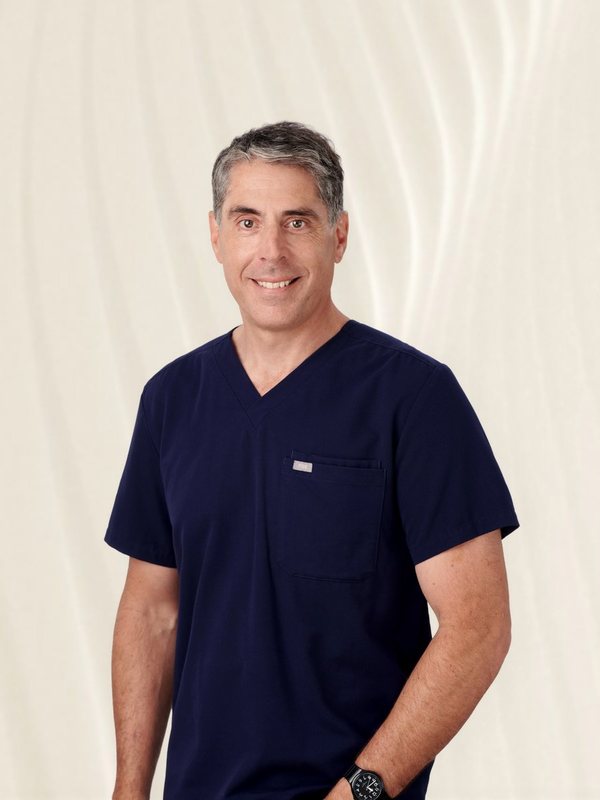
Medically reviewed by Dr. Thomas Buonassisi, MD, FRCSC
Specialist in Otolaryngology – Head and Neck Surgery, with a practice limited to facial plastic surgeries
Published September 21, 2026·Written by 8 West Clinic
When you're considering rhinoplasty in Canada, start with yourself before you start with surgeons: what exactly bothers you about your nose, and for how long. Then look at a surgeon's training, how much of their work is facial plastic surgery and rhinoplasty, how clearly they explain what your anatomy allows, and whether you feel heard in the consultation.
At 8 West, rhinoplasty is performed by Dr. Thomas Buonassisi, MD, FRCSC, Specialist in Otolaryngology – Head and Neck Surgery, with a practice limited to facial plastic surgeries. He has over 25 years of experience in facial plastic surgery and has performed over 2,500 rhinoplasties, with primary cosmetic rhinoplasty at the core of his work alongside ethnic rhinoplasty.
Many of the people our team speaks with have spent months, sometimes years, researching before they book a consultation. Some keep spreadsheets of surgeons. Others have watched dozens of videos and read every forum thread they can find. They're usually asking the right questions, but it isn't always clear how to weigh the answers. A well-informed patient tends to make clearer decisions and hold more realistic expectations, wherever they have surgery, so this article walks through the decision step by step. You'll find related articles in our Rhinoplasty Knowledge Hub.
Is rhinoplasty the right decision for you right now?
Before you look at surgeons, techniques or cities, ask whether rhinoplasty is the right choice at this point in your life. It's a real operation with permanent results, and recovery takes time. Most people are socially presentable in about 1–2 weeks, but the final result takes about 12 months to settle as the remaining swelling goes down, so the nose you see a few weeks after surgery isn't the nose you'll have at a year.
Early in a consultation, Dr. Buonassisi asks two questions. The opening one is what specifically bothers you about your nose. Wanting it to look better is an understandable starting point, but it's hard to act on, so it helps to narrow it down. Is it the bridge? The tip? The width at the base? Does it bother you more in profile or from the front? The more specific you can be, the more useful the conversation becomes, because a clear concern about one part of the nose is much easier to address surgically than a general sense that something's off.
The second question is how long you've felt this way. Rhinoplasty isn't a decision to make after a breakup, a hard stretch at work or a comment someone made in passing. The decision tends to sit well with people who've carried the same considered concern about a specific part of their nose for a long time, not with people reacting to a moment.
Age matters as well. If you're under 18, patience is wise: the nose keeps developing through the mid-teens, and operating before growth is complete can compromise the result. In your late teens and twenties there's no rush. If you're older and thinking about rhinoplasty alongside other facial surgery, bring that up at the consultation. How the nose relates to the rest of the face shifts over the years, and Dr. Buonassisi looks at that carefully in those cases.
What can rhinoplasty realistically change about your nose?
A big part of any consultation is getting a clear picture of what's achievable for your anatomy. Rhinoplasty isn't a matter of a surgeon copying a photo you saved from Instagram. The result is a balance between what you'd like and what your skin, cartilage and bone will allow, and a few things shape that balance more than anything else:
- Skin thickness. Thicker skin has more soft tissue over the cartilage framework, so even precise structural changes may not show as clearly at the surface. Thinner skin shows every detail, which means improvements and any irregularities are both easier to see. Neither is better or worse. They just call for different approaches and different expectations.
- Cartilage and septum. The strength, shape and position of the lower and upper lateral cartilages and the septum all set limits on what's possible for your nose.
- Ethnic background. Not as a limit on what you can achieve, but because a good rhinoplasty should suit your face rather than impose a single aesthetic ideal onto it.
That's why a surgeon should examine your nose carefully, ideally with photographs and computer imaging, before giving you any sense of what your result could look like. At 8 West, computer imaging is used in consultations to talk through what you'd like and to align expectations. It's a guide, not a promise, and it's there to help you and your surgeon agree on direction. Our article on setting realistic rhinoplasty expectations goes into this in more detail.
What does a natural rhinoplasty result mean for your face?
Most people who come to see us have thought about their nose for years, and the worry we hear more than any other is ending up with something that looks unnatural or doesn't look like them anymore. At 8 West, natural means a nose that looks like you, just refined. The aim is harmony and balance with the rest of your face, so the nose looks like it belongs there.
Ethnic rhinoplasty is part of Dr. Buonassisi's work, and it's approached with cultural sensitivity. The goal is a nose that looks natural and balanced for that person's face and keeps their identity, not a nose that looks like it belongs to someone else.
Looking natural and breathing well are the same goal. If breathing is part of what you'd like to improve, raise it at the consultation. At 8 West, septoplasty (straightening the septum, the wall of cartilage and bone inside the nose) is only performed as part of a cosmetic rhinoplasty, never on its own.
With any surgeon, it's fair to ask how they think about natural results for your face specifically.
How do you choose a surgeon for rhinoplasty in Canada?
Canada has a number of skilled surgeons, and choosing a rhinoplasty surgeon deserves more care than most people give it. Start with credentials, but don't stop there. In Canada, the credential to look for in a surgeon performing rhinoplasty is Fellowship of the Royal College of Physicians and Surgeons of Canada (FRCSC) in a surgical specialty.
Surgeons who perform rhinoplasty come from a few training backgrounds. The most common are Otolaryngology – Head and Neck Surgery, plastic surgery, and oral and maxillofacial surgery. What matters more than the name of the specialty is whether the surgeon has focused their work on the face, and how much of that work is rhinoplasty.
Dr. Buonassisi is a facial plastic surgery specialist. He holds his FRCSC in Otolaryngology – Head and Neck Surgery, has over 25 years of experience in facial plastic surgery and has performed over 2,500 rhinoplasties. Those details are easy to check, and that's the point. Whoever you're considering, ask what their training pathway was and what share of their work is rhinoplasty, and look for answers you can verify.
Which rhinoplasty techniques do you need to understand?
You'll come across a lot of terminology while you research: open versus closed rhinoplasty, structural versus preservation rhinoplasty, cartilage grafting, osteotomies (controlled cuts that let the nasal bones be reshaped). You don't need to become an expert in surgical technique to make a good decision, but a basic sense of the terms helps you follow the conversation.
The thing to hold on to is that technique should follow anatomy and goals, not the other way around. Every rhinoplasty Dr. Buonassisi performs is bespoke. He works one-on-one with each patient and uses the full range of techniques, choosing the approach for that person's anatomy and objectives after a thorough consultation. Ultrasonic (piezo) instruments and preservation techniques are part of that range: tools chosen for the right patient, not a default for everyone. The recommendation is driven by what will give a natural, harmonious result for that person, not by a preference for one method.
With any surgeon, ask which approach they're recommending for you and why. If you'd like a plain-language overview before you go, our page on rhinoplasty techniques walks through the main options.
How should you prepare for a rhinoplasty consultation?
The consultation is where you gather what you need to decide. At 8 West it's treated as a critical step, not a formality or a sales conversation: it's where expectations are aligned, candidacy is assessed and you learn what is and isn't achievable for your nose. Surgeon consultations at 8 West have a fee. Come prepared with photos of your nose from several angles and a written list of your specific concerns, and be open about your medical history, your medications and what you're hoping for. Reading The Essential Guide to Rhinoplasty beforehand can help you put your questions into words.
Pay attention to how the surgeon listens. Do they ask questions? Do they examine your nose carefully and explain their thinking? Be cautious with a surgeon who rushes the appointment, agrees with everything you say or makes promises that sound too good to be true.
These are worth asking wherever you consult:
- What their training was, and how much of their work is rhinoplasty
- Which approach they'd recommend for you, and why
- What their complication rate is, and how often patients need a second operation
- What happens if you aren't happy with the result
- What recovery involves, in detail
None of these are rude questions. They're what a well-informed patient asks, and a careful surgeon should be comfortable answering every one of them.
How much time should you give the decision?
Take your time and do your research. Rhinoplasty is technically demanding: the nose is small, the changes are subtle and the margin for error is narrow. The choice of surgeon is a big part of the whole process, so look for someone whose credentials you can verify, whose approach to natural results makes sense to you and with whom you feel genuinely heard.
Think about the practical side early too. Since most people are socially presentable in about 1–2 weeks, you'll want time away from work and social commitments around your surgery date, and it helps to remember the final result takes about 12 months. Rhinoplasty cost is part of the picture as well, and our rhinoplasty cost page has the details for 8 West.
If you're searching for rhinoplasty Vancouver options, you'll find surgeons across Vancouver and North Vancouver, and the same questions apply to every one of them.
Frequently asked questions
Is there a fee for a rhinoplasty consultation at 8 West?
Yes. Surgeon consultations at 8 West have a fee. The rhinoplasty consultation is a thorough, one-on-one appointment where Dr. Buonassisi examines your nose, talks through what you'd like to change and uses computer imaging to align expectations. It's where your candidacy is assessed and you find out what is and isn't achievable for your anatomy, so it's worth bringing photos and a written list of your concerns.
How soon can I go back to work after rhinoplasty?
Most people are socially presentable in about 1–2 weeks after rhinoplasty, and many time their return to work around that point. The exact timing depends on your surgery and the kind of work you do, so Dr. Buonassisi will talk it through with you at your consultation. Keep in mind that swelling settles gradually, and the final result takes about 12 months to show.
Can computer imaging show exactly what my nose will look like?
No. Computer imaging is a communication tool, not a promise. At 8 West it's used during the consultation to talk through what you'd like and to make sure you and Dr. Buonassisi are aiming in the same direction. Your actual result depends on your skin thickness, cartilage, bone structure and how you heal, and it takes about 12 months to settle fully.
Does 8 West offer ethnic rhinoplasty?
Yes. Ethnic rhinoplasty is part of Dr. Buonassisi's work alongside primary cosmetic rhinoplasty. It's approached with cultural sensitivity, and the aim is a nose that's in harmony with your face and keeps your identity, rather than one that follows a single aesthetic ideal. The approach is chosen after a thorough consultation, based on your anatomy and what you'd like to refine.
Can I have septoplasty on its own at 8 West?
No. At 8 West, septoplasty is only performed as part of a cosmetic rhinoplasty, never as a stand-alone procedure. If breathing is part of your concern, mention it at your consultation so Dr. Buonassisi can assess the inside of your nose as well as its shape. Looking natural and breathing well are treated as the same goal, so both are considered from the start.