The right approach depends on your anatomy, your goals, and the degree of change required. Dr. Buonassisi will recommend the technique that gives you the most natural, lasting result for your specific case.

There is no single rhinoplasty technique that suits every patient. Whether you are researching preservation rhinoplasty, weighing open versus closed rhinoplasty, or exploring options for a specific concern — hump reduction, tip refinement, ethnic rhinoplasty, or a revision after a previous surgery — Dr. Buonassisi performs all of them, and selects the approach that is right for your anatomy.
Understanding the techniques available — and how they differ — helps you arrive at your rhinoplasty consultation with better questions and clearer expectations. The entries below describe each approach on its own terms, but the surgical plan is always considered as a whole: most results require several complementary changes working together.
Dr. Buonassisi has performed over 2,500 rhinoplasty procedures across every technique — open rhinoplasty, closed rhinoplasty, preservation rhinoplasty, ethnic rhinoplasty, revision rhinoplasty, and facial feminization rhinoplasty. His approach is anatomy-first: the technique is selected based on your specific structure and goals, not a preferred method.
Every rhinoplasty at 8 West begins with a thorough consultation — a structured conversation about your anatomy, your goals, and what is realistically achievable. Patients who understand what rhinoplasty can and cannot do have better outcomes and higher satisfaction.
The techniques below describe the approaches Dr. Buonassisi uses — but it is important to understand that rhinoplasty is rarely a single isolated change. A nose that looks natural is almost always the result of several small adjustments working together. Reducing a dorsal hump, for example, nearly always requires addressing the tip at the same time: a hump reduction that leaves the tip untouched tends to look unbalanced, because the proportions of the nose have shifted without the tip being brought into harmony.
What patients often describe as a single concern — “I just want my bump reduced” or “I just want my tip refined” — usually involves a series of complementary manoeuvres to achieve a result that looks like it was always there. Dr. Buonassisi will explain exactly what is involved for your anatomy at consultation. The entries below describe each technique on its own terms, but the surgical plan is always considered as a whole.
Smoothing the nasal bridge for a refined, balanced profile.
A dorsal hump is a prominence of bone and cartilage along the nasal bridge. Hump reduction lowers this profile line — either by excising the excess tissue (traditional approach) or by letting down the dorsum while preserving the native anatomy (preservation approach). The result is a straighter, more refined bridge that harmonises with the rest of the face.
A prominent nasal hump can dominate the profile and draw attention away from the eyes and lips. Reducing it restores facial balance — often with a dramatic improvement in the overall profile. It is worth noting that hump reduction in isolation is rarely the complete picture: lowering the bridge changes the proportions of the nose, and the tip almost always needs to be addressed at the same time to maintain harmony. A reduced bridge with an unchanged tip can look disproportionate.
Patients with a visible dorsal hump on profile view. In the vast majority of cases, hump reduction is planned alongside tip work — the two changes are considered together to ensure the result looks balanced from every angle, not just in profile.
Dr. Buonassisi evaluates the hump's composition (bone, cartilage, or both), the strength of the middle vault, and the patient's skin thickness. He determines whether a preservation let-down or traditional resection is more appropriate, whether osteotomies or spreader grafts are needed to close the roof, and what tip work — if any — is required to keep the nose in proportion after the bridge is lowered.
The most significant advance in rhinoplasty in the past decade — conserving what works, refining what doesn't.
A dorsal hump is a prominence of bone and cartilage along the nasal bridge. Hump reduction lowers this profile line — either by excising the excess tissue (traditional approach) or by letting down the dorsum while preserving the native anatomy (preservation approach). The result is a straighter, more refined bridge that harmonises with the rest of the face.
A prominent nasal hump can dominate the profile and draw attention away from the eyes and lips. Reducing it restores facial balance — often with a dramatic improvement in the overall profile. It is worth noting that hump reduction in isolation is rarely the complete picture: lowering the bridge changes the proportions of the nose, and the tip almost always needs to be addressed at the same time to maintain harmony. A reduced bridge with an unchanged tip can look disproportionate.
Patients with a visible dorsal hump on profile view. In the vast majority of cases, hump reduction is planned alongside tip work — the two changes are considered together to ensure the result looks balanced from every angle, not just in profile.
Dr. Buonassisi evaluates the hump's composition (bone, cartilage, or both), the strength of the middle vault, and the patient's skin thickness. He determines whether a preservation let-down or traditional resection is more appropriate, whether osteotomies or spreader grafts are needed to close the roof, and what tip work — if any — is required to keep the nose in proportion after the bridge is lowered.
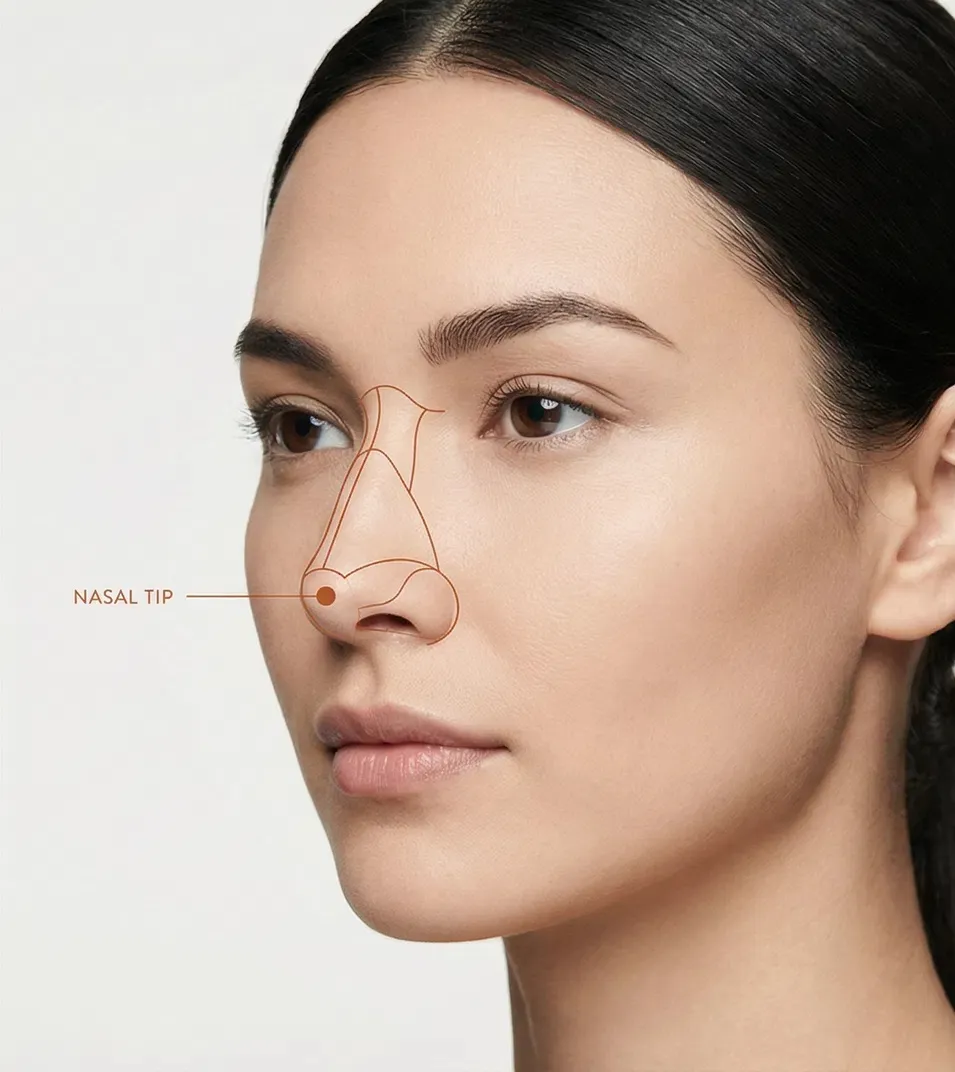
Reshaping the nasal tip for improved definition, projection, and proportion.
A dorsal hump is a prominence of bone and cartilage along the nasal bridge. Hump reduction lowers this profile line — either by excising the excess tissue (traditional approach) or by letting down the dorsum while preserving the native anatomy (preservation approach). The result is a straighter, more refined bridge that harmonises with the rest of the face.
A prominent nasal hump can dominate the profile and draw attention away from the eyes and lips. Reducing it restores facial balance — often with a dramatic improvement in the overall profile. It is worth noting that hump reduction in isolation is rarely the complete picture: lowering the bridge changes the proportions of the nose, and the tip almost always needs to be addressed at the same time to maintain harmony. A reduced bridge with an unchanged tip can look disproportionate.
Patients with a visible dorsal hump on profile view. In the vast majority of cases, hump reduction is planned alongside tip work — the two changes are considered together to ensure the result looks balanced from every angle, not just in profile.
Dr. Buonassisi evaluates the hump's composition (bone, cartilage, or both), the strength of the middle vault, and the patient's skin thickness. He determines whether a preservation let-down or traditional resection is more appropriate, whether osteotomies or spreader grafts are needed to close the roof, and what tip work — if any — is required to keep the nose in proportion after the bridge is lowered.
Full surgical access for complex cases, significant tip work, and revision surgery.
A dorsal hump is a prominence of bone and cartilage along the nasal bridge. Hump reduction lowers this profile line — either by excising the excess tissue (traditional approach) or by letting down the dorsum while preserving the native anatomy (preservation approach). The result is a straighter, more refined bridge that harmonises with the rest of the face.
A prominent nasal hump can dominate the profile and draw attention away from the eyes and lips. Reducing it restores facial balance — often with a dramatic improvement in the overall profile. It is worth noting that hump reduction in isolation is rarely the complete picture: lowering the bridge changes the proportions of the nose, and the tip almost always needs to be addressed at the same time to maintain harmony. A reduced bridge with an unchanged tip can look disproportionate.
Patients with a visible dorsal hump on profile view. In the vast majority of cases, hump reduction is planned alongside tip work — the two changes are considered together to ensure the result looks balanced from every angle, not just in profile.
Dr. Buonassisi evaluates the hump's composition (bone, cartilage, or both), the strength of the middle vault, and the patient's skin thickness. He determines whether a preservation let-down or traditional resection is more appropriate, whether osteotomies or spreader grafts are needed to close the roof, and what tip work — if any — is required to keep the nose in proportion after the bridge is lowered.
Enhancing your features while preserving the characteristics that define your heritage.
A dorsal hump is a prominence of bone and cartilage along the nasal bridge. Hump reduction lowers this profile line — either by excising the excess tissue (traditional approach) or by letting down the dorsum while preserving the native anatomy (preservation approach). The result is a straighter, more refined bridge that harmonises with the rest of the face.
A prominent nasal hump can dominate the profile and draw attention away from the eyes and lips. Reducing it restores facial balance — often with a dramatic improvement in the overall profile. It is worth noting that hump reduction in isolation is rarely the complete picture: lowering the bridge changes the proportions of the nose, and the tip almost always needs to be addressed at the same time to maintain harmony. A reduced bridge with an unchanged tip can look disproportionate.
Patients with a visible dorsal hump on profile view. In the vast majority of cases, hump reduction is planned alongside tip work — the two changes are considered together to ensure the result looks balanced from every angle, not just in profile.
Dr. Buonassisi evaluates the hump's composition (bone, cartilage, or both), the strength of the middle vault, and the patient's skin thickness. He determines whether a preservation let-down or traditional resection is more appropriate, whether osteotomies or spreader grafts are needed to close the roof, and what tip work — if any — is required to keep the nose in proportion after the bridge is lowered.
Correcting unsatisfactory results from a previous rhinoplasty.
A dorsal hump is a prominence of bone and cartilage along the nasal bridge. Hump reduction lowers this profile line — either by excising the excess tissue (traditional approach) or by letting down the dorsum while preserving the native anatomy (preservation approach). The result is a straighter, more refined bridge that harmonises with the rest of the face.
A prominent nasal hump can dominate the profile and draw attention away from the eyes and lips. Reducing it restores facial balance — often with a dramatic improvement in the overall profile. It is worth noting that hump reduction in isolation is rarely the complete picture: lowering the bridge changes the proportions of the nose, and the tip almost always needs to be addressed at the same time to maintain harmony. A reduced bridge with an unchanged tip can look disproportionate.
Patients with a visible dorsal hump on profile view. In the vast majority of cases, hump reduction is planned alongside tip work — the two changes are considered together to ensure the result looks balanced from every angle, not just in profile.
Dr. Buonassisi evaluates the hump's composition (bone, cartilage, or both), the strength of the middle vault, and the patient's skin thickness. He determines whether a preservation let-down or traditional resection is more appropriate, whether osteotomies or spreader grafts are needed to close the roof, and what tip work — if any — is required to keep the nose in proportion after the bridge is lowered.
Subtle nasal refinements as part of a comprehensive facial feminization approach.
A dorsal hump is a prominence of bone and cartilage along the nasal bridge. Hump reduction lowers this profile line — either by excising the excess tissue (traditional approach) or by letting down the dorsum while preserving the native anatomy (preservation approach). The result is a straighter, more refined bridge that harmonises with the rest of the face.
A prominent nasal hump can dominate the profile and draw attention away from the eyes and lips. Reducing it restores facial balance — often with a dramatic improvement in the overall profile. It is worth noting that hump reduction in isolation is rarely the complete picture: lowering the bridge changes the proportions of the nose, and the tip almost always needs to be addressed at the same time to maintain harmony. A reduced bridge with an unchanged tip can look disproportionate.
Patients with a visible dorsal hump on profile view. In the vast majority of cases, hump reduction is planned alongside tip work — the two changes are considered together to ensure the result looks balanced from every angle, not just in profile.
Dr. Buonassisi evaluates the hump's composition (bone, cartilage, or both), the strength of the middle vault, and the patient's skin thickness. He determines whether a preservation let-down or traditional resection is more appropriate, whether osteotomies or spreader grafts are needed to close the roof, and what tip work — if any — is required to keep the nose in proportion after the bridge is lowered.
Correcting a deviated septum to restore natural airflow — often combined with cosmetic rhinoplasty.
A dorsal hump is a prominence of bone and cartilage along the nasal bridge. Hump reduction lowers this profile line — either by excising the excess tissue (traditional approach) or by letting down the dorsum while preserving the native anatomy (preservation approach). The result is a straighter, more refined bridge that harmonises with the rest of the face.
A prominent nasal hump can dominate the profile and draw attention away from the eyes and lips. Reducing it restores facial balance — often with a dramatic improvement in the overall profile. It is worth noting that hump reduction in isolation is rarely the complete picture: lowering the bridge changes the proportions of the nose, and the tip almost always needs to be addressed at the same time to maintain harmony. A reduced bridge with an unchanged tip can look disproportionate.
Patients with a visible dorsal hump on profile view. In the vast majority of cases, hump reduction is planned alongside tip work — the two changes are considered together to ensure the result looks balanced from every angle, not just in profile.
Dr. Buonassisi evaluates the hump's composition (bone, cartilage, or both), the strength of the middle vault, and the patient's skin thickness. He determines whether a preservation let-down or traditional resection is more appropriate, whether osteotomies or spreader grafts are needed to close the roof, and what tip work — if any — is required to keep the nose in proportion after the bridge is lowered.
Precise bone reshaping with less trauma, less bruising, and a faster recovery.
A dorsal hump is a prominence of bone and cartilage along the nasal bridge. Hump reduction lowers this profile line — either by excising the excess tissue (traditional approach) or by letting down the dorsum while preserving the native anatomy (preservation approach). The result is a straighter, more refined bridge that harmonises with the rest of the face.
A prominent nasal hump can dominate the profile and draw attention away from the eyes and lips. Reducing it restores facial balance — often with a dramatic improvement in the overall profile. It is worth noting that hump reduction in isolation is rarely the complete picture: lowering the bridge changes the proportions of the nose, and the tip almost always needs to be addressed at the same time to maintain harmony. A reduced bridge with an unchanged tip can look disproportionate.
Patients with a visible dorsal hump on profile view. In the vast majority of cases, hump reduction is planned alongside tip work — the two changes are considered together to ensure the result looks balanced from every angle, not just in profile.
Dr. Buonassisi evaluates the hump's composition (bone, cartilage, or both), the strength of the middle vault, and the patient's skin thickness. He determines whether a preservation let-down or traditional resection is more appropriate, whether osteotomies or spreader grafts are needed to close the roof, and what tip work — if any — is required to keep the nose in proportion after the bridge is lowered.
Rhinoplasty for younger patients — considered once facial growth is complete.
A dorsal hump is a prominence of bone and cartilage along the nasal bridge. Hump reduction lowers this profile line — either by excising the excess tissue (traditional approach) or by letting down the dorsum while preserving the native anatomy (preservation approach). The result is a straighter, more refined bridge that harmonises with the rest of the face.
A prominent nasal hump can dominate the profile and draw attention away from the eyes and lips. Reducing it restores facial balance — often with a dramatic improvement in the overall profile. It is worth noting that hump reduction in isolation is rarely the complete picture: lowering the bridge changes the proportions of the nose, and the tip almost always needs to be addressed at the same time to maintain harmony. A reduced bridge with an unchanged tip can look disproportionate.
Patients with a visible dorsal hump on profile view. In the vast majority of cases, hump reduction is planned alongside tip work — the two changes are considered together to ensure the result looks balanced from every angle, not just in profile.
Dr. Buonassisi evaluates the hump's composition (bone, cartilage, or both), the strength of the middle vault, and the patient's skin thickness. He determines whether a preservation let-down or traditional resection is more appropriate, whether osteotomies or spreader grafts are needed to close the roof, and what tip work — if any — is required to keep the nose in proportion after the bridge is lowered.
Our pre-assessment takes 5–10 minutes and helps Dr. Buonassisi's team understand your goals before your consultation. There is no obligation to proceed.
The techniques described in the section above — open, closed, preservation — refer to the overall surgical approach. Within each procedure, Dr. Buonassisi performs a series of individual manoeuvres: precise, targeted steps that address specific areas of the nose. A single rhinoplasty may involve four, five, or more of these manoeuvres working in combination.
Understanding what each manoeuvre does — and why it might be needed — helps patients have a more informed conversation at consultation. The nine entries below cover the most commonly performed manoeuvres in rhinoplasty. Not all will apply to every patient; the specific combination is determined by the anatomy and the goals.

What it is — Removes a measured strip from the cephalic (upper) edge of the lower lateral cartilages — the cartilages that form the tip and alar rims.
Why it matters — Reduces tip bulkiness and width. One of the most commonly performed tip manoeuvres, but requires restraint: over-resection weakens the alar rim and can cause long-term collapse.

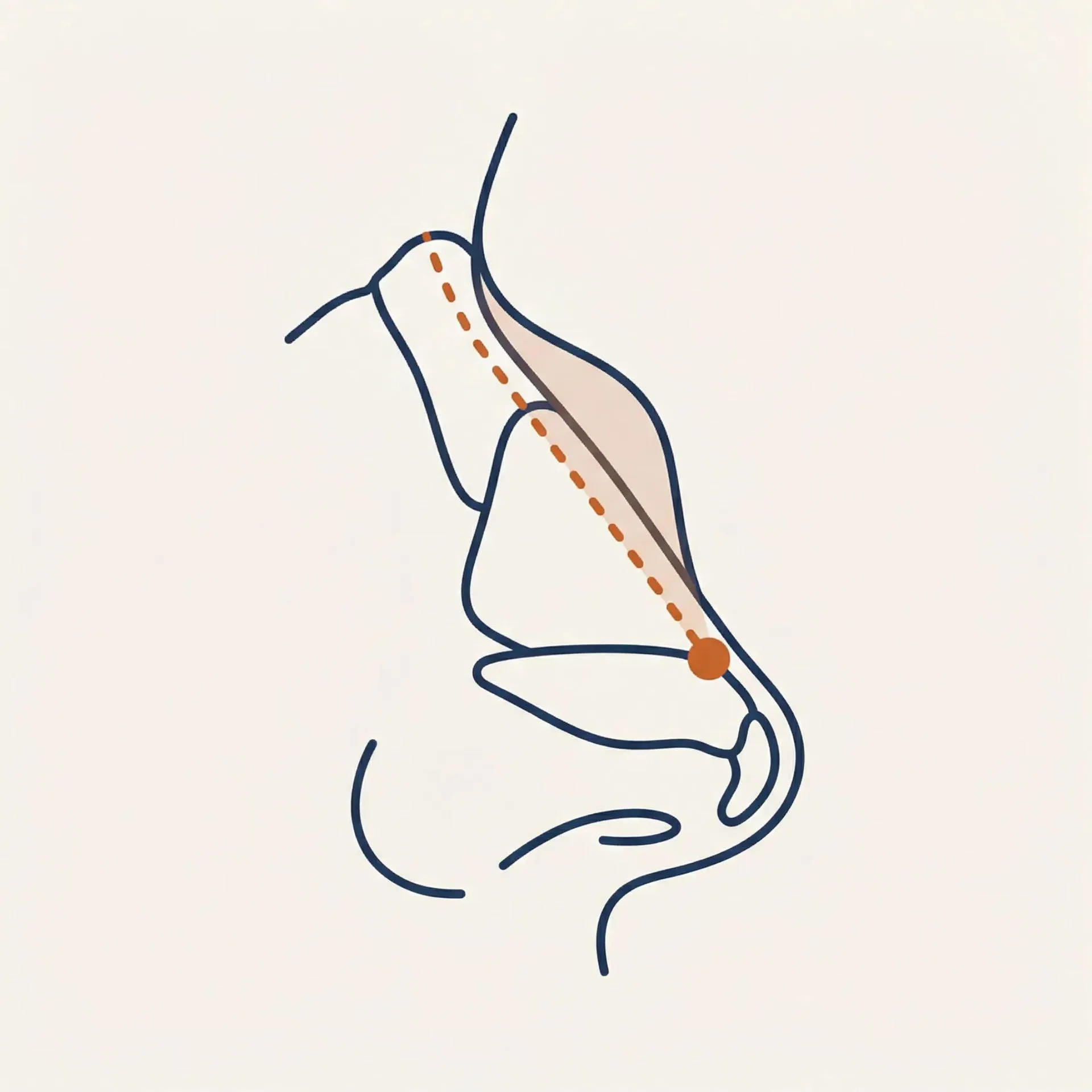
What it is — Reduces how far the nasal tip projects forward from the face. Techniques include cartilage scoring, tongue-in-groove setback, or medial crural overlap.
Why it matters — Addresses a nose that protrudes too prominently. Often combined with tip rotation to achieve a more balanced profile.

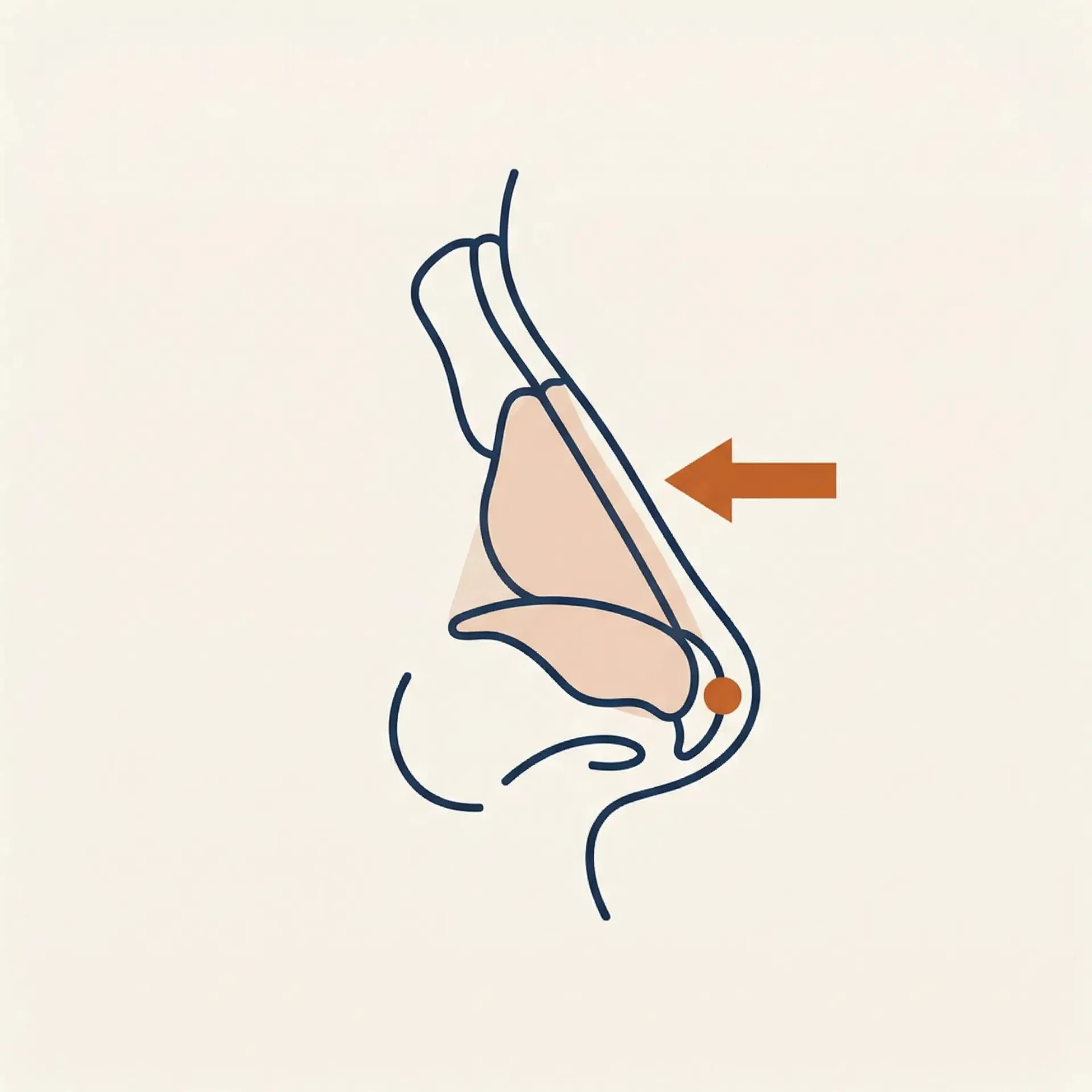
What it is — Reduces the convex prominence along the nasal bridge — a combination of bone in the upper third and cartilage in the middle third. The hump is either excised (traditional resection) or lowered by letting down the entire dorsum while preserving the native anatomy (preservation approach).
Why it matters — The most commonly requested change in rhinoplasty. Reducing the hump alone is rarely the full picture — the middle vault, tip, and overall profile must all be considered together. Hump reduction without addressing the tip almost always creates a disproportionate result, which is why it is nearly always part of a broader surgical plan.

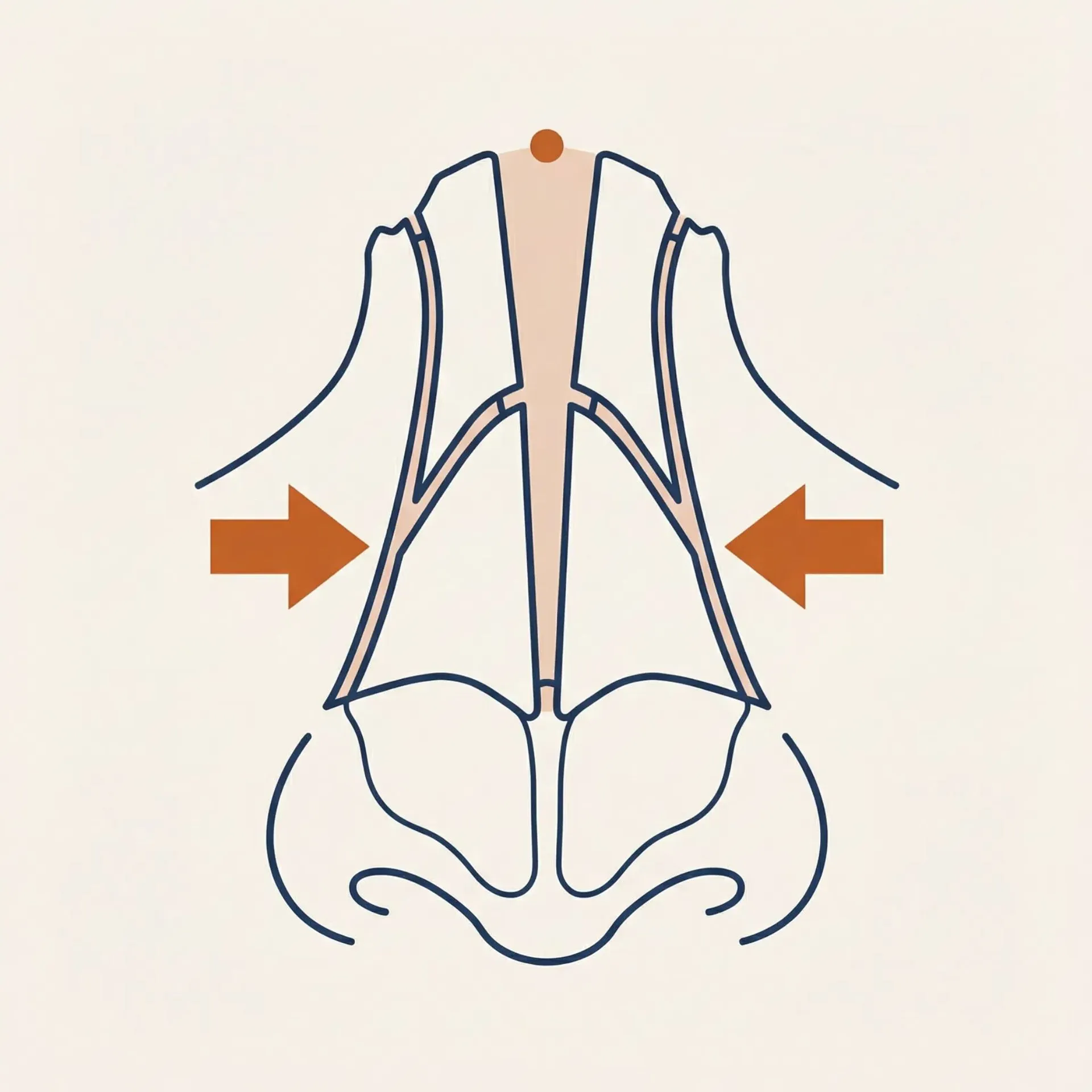
What it is — Controlled fracture of the nasal bones to narrow the bony vault or close an open roof after hump reduction. Performed through small internal incisions.
Why it matters — After removing a dorsal hump, the nasal bones are left separated — creating an open roof that must be closed by infracturing the bones inward.

What it is — A piece of cartilage (usually harvested from the septum) placed between the medial crura of the tip cartilages to create a stable foundation for the tip..
Why it matters —Adds tip support, projection, and definition. Essential in preservation rhinoplasty when tip support has been reduced.

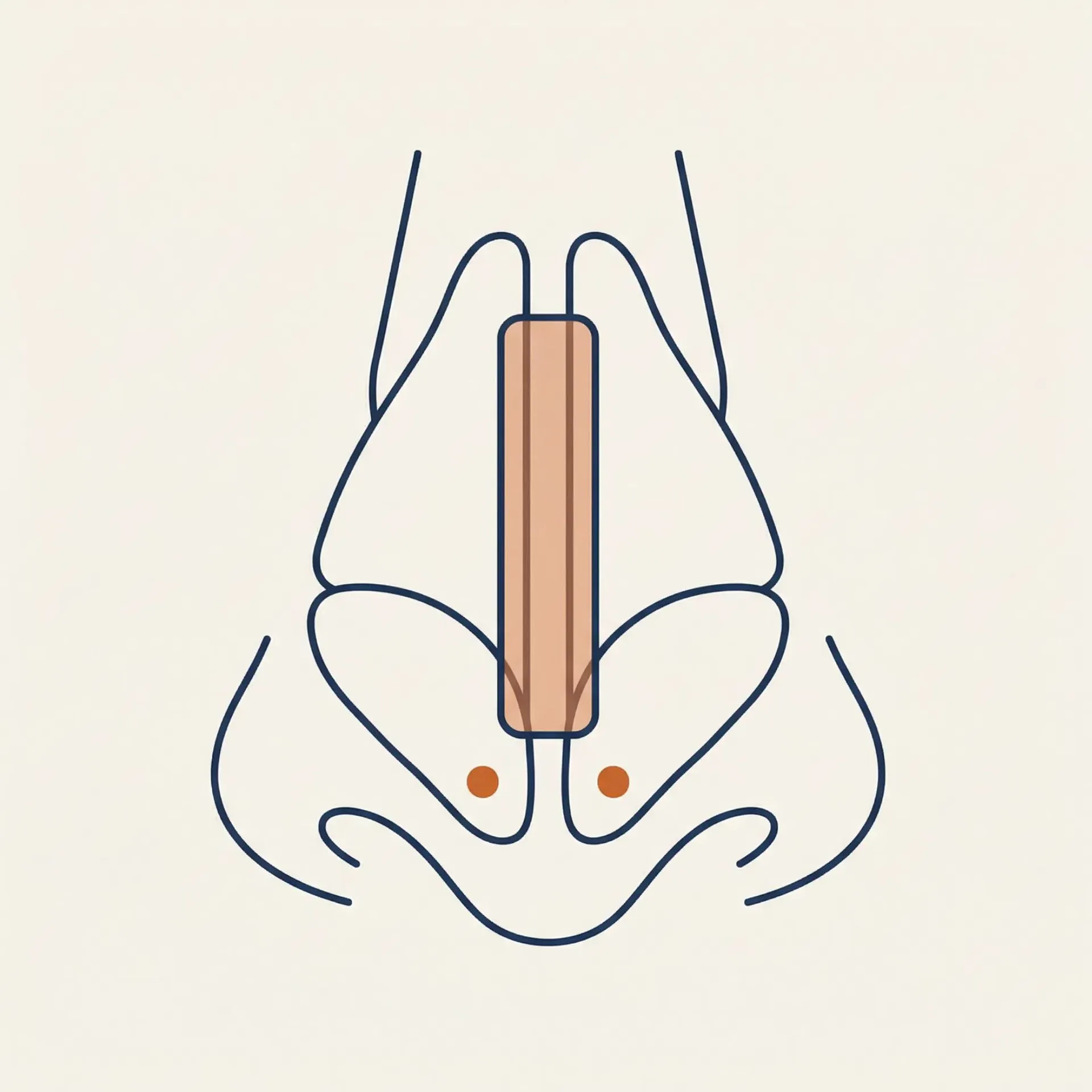
What it is — Thin cartilage grafts placed between the upper lateral cartilages and the septum to widen the middle vault and maintain the internal nasal valve angle.
Why it matters — Prevents the pinched, inverted-V deformity that can occur after aggressive hump reduction. Also used to correct nasal obstruction.

What it is — A family of suturing manoeuvres — transdomal, interdomal, and lateral crural mattress sutures — that reshape the tip cartilages without removing tissue.
Why it matters — Allows precise tip refinement with minimal tissue disruption. Preferred over excision in preservation rhinoplasty.

What it is — Removes a small wedge of tissue at the base of the nostrils (alar wedge excision) or at the sill to narrow the base width or reduce flaring.
Why it matters — Addresses nostrils that are too wide or flare excessively. Often performed as a finishing step after tip and bridge work.

What it is — Straightens a deviated septum and harvests cartilage that can be used as graft material for struts, spreaders, or tip grafts elsewhere in the nose.
Why it matters — The septum is the primary donor site for rhinoplasty grafts. Correcting a deviation improves breathing while providing raw material for structural reconstruction.

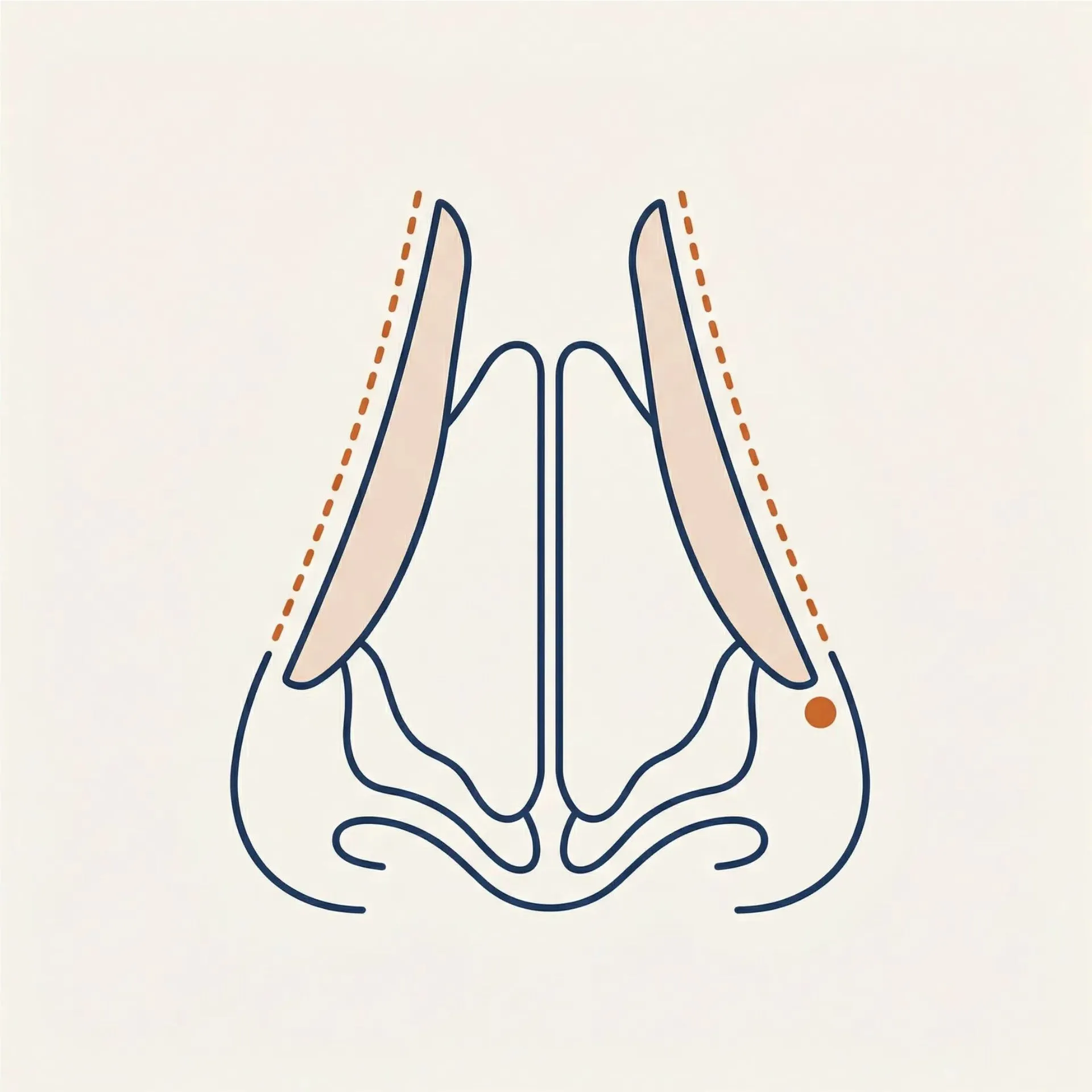
What it is — Reduces the bilateral bony prominences on the lateral sides of the nasal bridge near the rhinion — the points where the nasal bones flare outward and create visible widening of the upper bridge.
Why it matters —Distinct from hump reduction, which addresses the dorsal profile line. Rhinion horn reduction narrows the bridge width when viewed from the front, refining the upper third without altering the profile height. Often performed in combination with osteotomies.

What it is — Adds projection, definition, or height to the nasal tip using a cartilage graft — typically a shield graft or cap graft harvested from the septum or ear — placed at the tip to increase its prominence and refine its shape.
Why it matters — Used when the tip lacks projection, appears flat, or needs structural support after other tip manoeuvres. Particularly important in ethnic rhinoplasty and revision cases where native tip cartilage is weak or has been previously altered. Rarely performed in isolation — tip augmentation is almost always part of a broader plan that addresses the bridge and overall balance.

What it is — Raises the height of the nasal bridge using a cartilage graft (typically diced cartilage wrapped in fascia, or a solid septal/rib graft) or, in some cases, a silicone implant placed along the dorsum.
Why it matters — Addresses a flat or low dorsum — a common goal in ethnic rhinoplasty where patients want to add bridge height while preserving their ethnic identity. The approach is always considered in relation to tip projection and facial proportions; augmenting the bridge without addressing the tip can create an unbalanced result.
Diagrams use the Elevation Mark visual language — the same annotation system applied across all 8 West educational content.
Surgeon-authored guides covering technique selection, recovery, candidacy, and what to expect — written for patients who want to make an informed decision.