

Realistic rhinoplasty expectations start with the nose you already have. A nose is an existing structure with a job to do, so most noses can be improved in shape, size and overall appearance, within reason, but a drastic change to the way a nose looks usually isn't feasible. That's the thing a surgeon most wants to be sure you understand.
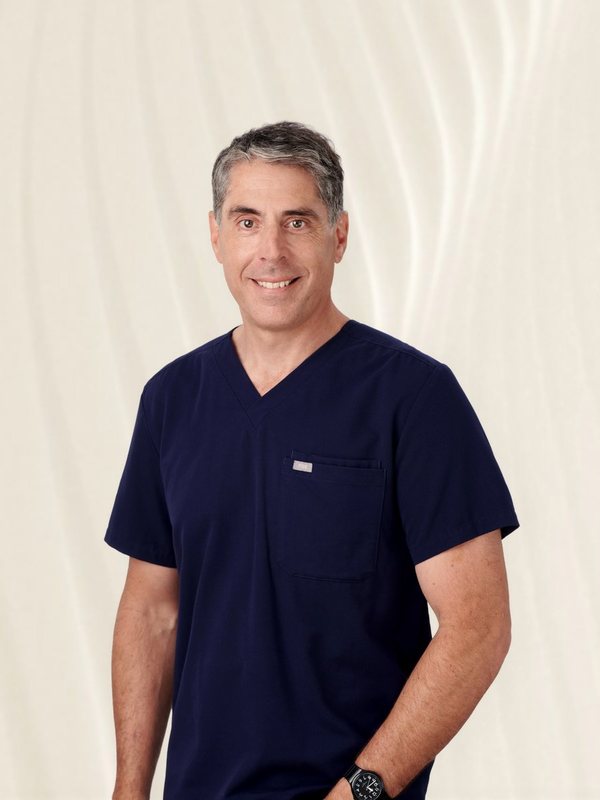
In this short video, Dr. Thomas Buonassisi, MD, FRCSC, Specialist in Otolaryngology – Head and Neck Surgery, with a practice limited to facial plastic surgeries, explains why expectations matter so much at a consultation and what he suggests you do before deciding on surgery. The patient in this video agreed to share it.
Why do realistic rhinoplasty expectations matter so much?
Asked what a surgeon wants to know at a rhinoplasty consultation, Dr. Buonassisi doesn't hesitate. By far the most important thing, he says, is to feel confident that you have realistic expectations.
That might sound like a formality, but it shapes everything that follows. In general, how someone feels about their result depends a lot on what they expected going in. If the hope is for something the nose can't deliver, even a careful, well-judged surgery can feel disappointing. When the expectation matches what's possible, the conversation can focus on the details that matter.
That's why the consultation at 8 West is treated as a critical step rather than a sales step. It's where expectations are aligned, candidacy is assessed and you learn what is and isn't achievable. You can read more about how we approach rhinoplasty on our main page.
Why can't a surgeon make any nose you want?
Dr. Buonassisi puts it simply: a nose isn't a block of wood. You can't carve whatever you'd like out of it. It's a pre-existing structure, and it's an organ with a function, so there's only so much that can be done with it.
In general, the shape of the nose comes from bone, cartilage and the skin that covers them, and each sets limits. Skin, for example, drapes over the framework underneath, so its thickness affects how much fine detail shows. The nose also has to keep working as an airway, which is why changes to the outside have to respect what's happening inside.
At 8 West, looking natural and breathing well are treated as the same goal. A change that looks good on paper but doesn't suit the structure of your nose, or how it needs to function, isn't a realistic goal.
What can rhinoplasty achieve, and what can't it?
Dr. Buonassisi compares it to a car that's been in an accident. A good body shop can make the car look the way it used to, but it can't rebuild it so that it looks like a different car. Rhinoplasty works in a similar way: it works with the nose you have rather than replacing it with someone else's.
Within reason, he says, most noses can have improvements in their shape, their size and their appearance in general. What isn't really feasible is a drastic change to the way someone's nose looks. That's an honest answer to the question of what rhinoplasty can achieve.
This lines up with how results are described at 8 West: natural harmony, with your identity kept intact. The aim is a nose that looks like you, just refined, in balance with the rest of your face.
Who may not be a good fit for rhinoplasty?
In general, rhinoplasty tends to suit people who'd like to refine specific features of their own nose and are open to a surgeon's view of what will suit their face. Many have thought about it for years, and what they want is to look like themselves, only with a nose that feels more in balance.
It may not be the right step if what you're hoping for is a nose that would belong on a different face, or a change much bigger than your anatomy allows. That isn't a judgement about your nose. It's simply what Dr. Buonassisi means when he says drastic changes aren't realistic.
How do you know what rhinoplasty results are realistic for you?
Every rhinoplasty Dr. Buonassisi performs is bespoke. He meets one-on-one with each patient and recommends an approach tailored to your anatomy and objectives, drawing on over 25 years of experience in facial plastic surgery and over 2,500 rhinoplasties. He uses the full range of rhinoplasty techniques, choosing what suits your nose rather than favouring one method.
His advice for anyone going to a consultation is practical:
- Be open-minded about what the surgeon suggests.
- Listen to what the surgeon has to say about your nose.
- Look at photos of other patients the surgeon has treated.
- Do computer imaging, so the surgeon can show you what they can achieve surgically.
Computer imaging gives you a rough idea of what to expect. It's a guide to talk through goals, not a promise of how your nose will turn out. Our video on how computer imaging is used explains what it can and can't show. Surgeon consultations at 8 West have a fee.
How long does it take to see your final result?
Realistic expectations include timing too. Most people are socially presentable in about 1–2 weeks, but final results take about 12 months. The nose you see in the mirror a few weeks after surgery isn't the finished picture yet.
Like any surgery, rhinoplasty has risks and trade-offs, and they're reviewed at your consultation. At our clinic, which serves patients from Vancouver and North Vancouver, follow-up visits are part of the process and a good chance to check how healing is going. To see what a check-in can look like part way through healing, watch our two-month rhinoplasty follow-up.
The free Essential Guide to Rhinoplasty has more on preparing for your consultation, and the Rhinoplasty Knowledge Hub has more short videos from Dr. Buonassisi.
Frequently asked questions
Can rhinoplasty give me any nose shape I want?
No. Dr. Buonassisi explains that a nose is a pre-existing structure and an organ with a function, so there's only so much that can be done with it. Within reason, most noses can be improved in shape, size and overall appearance, but drastic changes to the way a nose looks usually aren't feasible or realistic.
Why does the surgeon ask so many questions about my expectations?
Because it's the most important thing a surgeon wants to know at a rhinoplasty consultation. Dr. Buonassisi wants to feel confident that your expectations are realistic before recommending surgery. Understanding what you'd like to change, and why, also helps him recommend an approach tailored to your anatomy, rather than a standard one.
How accurate is computer imaging for rhinoplasty?
Computer imaging gives you a rough idea of what to expect. It shows the kind of change being discussed on your own face, which makes it easier to talk through goals. It's a guide, not a promise. In general, an image can't account for how your skin and tissues heal, which is part of why final results take about 12 months.
What makes a rhinoplasty expectation unrealistic?
In general, an expectation becomes unrealistic when it asks for a nose your anatomy can't support, or a change so large that the nose would no longer suit your face. Skin thickness, the underlying bone and cartilage, and the need to keep breathing well all set limits. The consultation is where you learn what is and isn't achievable for you.
When will I see my final rhinoplasty results?
Most people are socially presentable in about 1–2 weeks after rhinoplasty, but final results take about 12 months. Swelling settles gradually over that time, so it's normal for the nose to still be changing for months after surgery. Follow-up visits are a good time to ask how healing is going.