What Is Ultrasonic Piezo Rhinoplasty? Your FAQs Answered
Techniques
Reviewed by Dr. Buonassisi
Medically reviewed by Dr. Thomas Buonassisi, MD, FRCSC
Specialist in Otolaryngology – Head and Neck Surgery, with a practice limited to facial plastic surgeries
Published July 2026·Written by 8 West Clinic
<p>Ultrasonic rhinoplasty is rhinoplasty in which the bone work is done with a piezotome, an ultrasonic device that cuts bone using high-frequency vibrations instead of a chisel. It's used for parts of the procedure such as reducing a hump, narrowing the nasal bones and making tiny holes for sutures. It's a tool chosen for the right patient, not a different operation.</p><p>In this video, <a href="/rhinoplasty-dr-buonassisi">Dr. Thomas Buonassisi, MD, FRCSC, Specialist in Otolaryngology – Head and Neck Surgery, with a practice limited to facial plastic surgeries</a>, demonstrates the piezotome on a thin wooden tongue depressor and answers questions patients often ask about it, from how it works to whether it changes bruising.</p><h2>What is ultrasonic rhinoplasty used for?</h2><p>Rhinoplasty has a lot of different parts. Some involve cartilage, mainly in the lower nose and tip, and some involve the nasal bones that form the upper part of the bridge. Ultrasonic rhinoplasty refers to using a piezotome, or ultrasound device, for the bone work.</p><p>According to Dr. Buonassisi, the parts of rhinoplasty where ultrasound is extremely useful include:</p><ul><li>Reducing a hump on the bridge</li><li>Narrowing the nasal bones</li><li>Changing the height or width of the bridge</li><li>Drilling tiny holes in the bone so sutures can pass through and hold things in place</li></ul><p>If someone only needs changes to the tip, such as narrowing or refining it, there's no reason to use the piezotome, because those structures are cartilage. Wherever the bones need to be modified, though, he finds it very helpful. The device also can't do the whole operation: other instruments are still needed, particularly for the cartilage.</p><h2>Why use a piezotome instead of a chisel?</h2><p>The main reason Dr. Buonassisi gives is accuracy. The nasal bones are thin, there's one on each side of the nose, and each has its own shape and length. To bring them inward, a surgeon can fracture them with a chisel, push them in by hand, or file them down with rasps. Those are all established methods, and he still uses a chisel himself.</p><p>The difference is control. When a bone is fractured with a chisel or pushed in manually, the fracture line can end up anywhere, not necessarily where the surgeon wants it. With a piezotome, Dr. Buonassisi makes a very gentle cut through the bone, which encourages it to fracture exactly where he intends. In the video, he shows this on the tongue depressor: light strokes, barely any pressure, and the wood doesn't even flex.</p><p>Because the device oscillates at a very high frequency, it can cut or remove bone without a lot of force. A chisel, by comparison, needs a small mallet and a fair bit of pressure to move through the tissue. He's careful to say the chisel is still effective and lots of surgeons use it. He simply finds the piezotome more predictable in his hands, especially when the nasal bones are thick.</p><p>He also likes to leave the soft tissue around the bone intact and keep the bone attached on its undersurface. That way the nasal bones can move inward but stay stable afterwards, which he shows in the demonstration as a controlled bend rather than a clean break.</p><h2>How does the ultrasonic drill help narrow the nose?</h2><p>Dr. Buonassisi also uses an ultrasonic drill for a technique that brings the nasal bones together. Once the bones are mobilized, he makes a tiny hole through the bone on one side, passes a stitch through it, and takes the stitch across to the bone on the other side. When he ties it, the suture draws the nasal bones inward and keeps them tight during healing.</p><p>He describes this as a way to narrow the nose bones without causing much trauma to them. With a regular drill, he finds it very difficult to reach the right spot, whereas the ultrasonic tool makes the hole gently in about five seconds. The drill isn't particularly sharp either, which he demonstrates by touching it to his own skin.</p><h2>Does piezo rhinoplasty mean less bruising?</h2><p>In Dr. Buonassisi's experience, bruising is typically less with ultrasonic rhinoplasty, at least early on. His explanation is about the surrounding tissue. Bone itself doesn't bleed a lot, whichever tool is used. Chisels are fairly large, though, and the soft tissues around them often get some damage and tend to bleed more.</p><p>That bleeding is what causes rhinoplasty bruising. In general, bleeding from the osteotomy sites, the places where the nasal bones are cut, tends to travel to the area around the eyes. Because the piezotome disturbs the soft tissue less, he notices less bruising in the first week.</p><p>He's also clear about the limits of that. Bruising goes away either way, and by three or four weeks after surgery he doesn't think it makes a big difference. Whatever tools are used, most people are socially presentable in about 1–2 weeks after rhinoplasty at 8 West, and final results take about 12 months to be visible.</p><h2>When does Dr. Buonassisi choose the piezotome?</h2><p>Not in every case. Dr. Buonassisi uses the piezotome often, but he's clear that it isn't necessary for every rhinoplasty and that there are situations where he doesn't need it. It depends on what each nose needs.</p><p>He finds it particularly useful in two situations. One is thick nasal bones. The other is when he wants to be very precise about how much he mobilizes the bones, for example in a preservation rhinoplasty. In general, preservation rhinoplasty is an approach centred on how the bridge is treated, keeping more of its natural structure rather than removing and rebuilding it.</p><p>That fits with how rhinoplasty works at 8 West. Every rhinoplasty Dr. Buonassisi performs is bespoke, and he uses the full range of <a href="/rhinoplasty-techniques">rhinoplasty techniques</a>, choosing between them for each patient's anatomy after a thorough consultation. The piezotome is one tool among many, and decisions about approach, such as <a href="/rhinoplasty-knowledge-hub/closed-vs-scarless-rhinoplasty-explained">closed vs scarless rhinoplasty</a>, are made the same way.</p><h2>How much does the tool matter compared with the surgeon?</h2><p>Patients sometimes ask how ultrasonic rhinoplasty compares with traditional rhinoplasty. Dr. Buonassisi's answer is that it's difficult to say. In his view, what matters more is the experience of the surgeon. An ultrasound device doesn't give someone a good rhinoplasty on its own.</p><p>At 8 West, rhinoplasty is performed by Dr. Buonassisi, who has over 25 years of experience in facial plastic surgery and has performed over 2,500 rhinoplasties. The consultation is where he assesses your anatomy, explains what is and isn't achievable, and recommends an approach. Computer imaging is used to talk through goals, as a guide rather than a promise, and consultations have a fee.</p><p>A few questions you may want to ask:</p><ul><li>Does the procedure involve bone work, or mainly the tip?</li><li>Would a piezotome be useful in this case, and why?</li><li>What can be expected for bruising in the early days?</li><li>Which other instruments or techniques would be used?</li></ul><p>We see patients from Vancouver and North Vancouver, and you can read more about the procedure on our <a href="/rhinoplasty">rhinoplasty</a> page or in our free guide, <a href="/rhinoplasty#guide">The Essential Guide to Rhinoplasty</a>. More short videos are in the <a href="/rhinoplasty-knowledge-hub">Rhinoplasty Knowledge Hub</a>.</p><h2>Frequently asked questions</h2><h3>Is ultrasonic rhinoplasty permanent?</h3><p>Yes, in the same way any rhinoplasty is. Dr. Buonassisi explains that ultrasonic rhinoplasty is no different from other rhinoplasty techniques here: the idea behind rhinoplasty is to make a long-term, permanent change to the nose. Using ultrasound for the bone work makes permanent changes, and so do the other surgical tools that are used during the procedure.</p><h3>Does ultrasonic rhinoplasty still involve breaking the nose?</h3><p>When the nasal bones need to move, yes, there is still a controlled fracture. The difference Dr. Buonassisi describes is that the piezotome makes a gentle cut through the bone first, so the bone fractures where he intends rather than anywhere along its length. He can also keep the bone attached on its undersurface so it moves inward but stays stable.</p><h3>Does the piezotome cut soft tissue?</h3><p>It's used on bone. Dr. Buonassisi explains that because the ultrasound works gently, the surrounding soft tissues aren't damaged the way they can be with larger instruments, and he says he could use it on his finger and it wouldn't do anything. Like any surgery, rhinoplasty still has risks, and these are discussed in detail at consultation.</p><h3>Does ultrasonic rhinoplasty make surgery quicker?</h3><p>Dr. Buonassisi says the powered device can make some steps of the bone work a little quicker. Making a hole for a suture, for example, takes him about five seconds. That's about the surgery itself, not recovery. After rhinoplasty at 8 West, most people are socially presentable in about 1–2 weeks, and final results take about 12 months to be visible.</p>
Complimentary Resource
The Vancouver Rhinoplasty Guide
From 8 West Clinic, reviewed by Dr. Buonassisi. Candidacy, techniques, recovery, costs, and how to choose a surgeon. Complimentary, no commitment required.
8 West ClinicThe Vancouver Rhinoplasty GuideComplimentary
Get the Essential Guide to Rhinoplasty
Complimentary, no obligation.
We email you the guide right away. Strictly confidential. Privacy policy
Tell us a little about you, and a patient care manager will call you to answer your questions and help you figure out your next step, before you ever step into the clinic.
Ultrasonic rhinoplasty refers to the use of a piezotome or an ultrasound device to do the bone work involved in rhinoplasty. So rhinoplasty has lots of different components to it. The bone work, which is really hump production, narrowing of the nose bones. Sometimes we need to drill some tiny little holes so that we can put sutures through bone. Those are the parts of the rhinoplasty where ultrasound is extremely useful. So why do we use piezotome or ultrasound device in rhinoplasty? The main reason is for its accuracy. Now I don't use it in all cases. There are situations where I don't really need to use it. But when I have thick nose bones or if I wanna be very, very precise about how much I mobilize the nose bones, for example, in a preservation rhinoplasty, then I think the ultrasound is very useful for that. So as an analogy, what I'm gonna do is I'm gonna take this very thin tongue depressor, which is probably similar to the thickness of nose bones. So remember, the nose bone is on a block. There's a nose bone on each side of the nose. They're thin. They have a certain shape and length to them. If I want to make the nose bones come inwards, I can fracture them with a chisel. I can push them inwards. I can, you know, file them down with rasps. But what I like to do is make a very, very gentle cut through the nose bones, keeping all the soft tissue around it intact, and that helps to stabilize things after. So if I wanted to cut through the nose bone, for example, here, at that point, if I fracture that with a chisel or if I push it in sort of manually, that fracture line can be anywhere, and it may not necessarily fracture right where I want it to. With a piezotome, what I can do is I can take that fracture line, and I can actually encourage it to fracture exactly where I want it by cutting through the bone. So I'll show you how I do that. This is the actual tool that I use. And I basically just make a very gentle cut. I'm barely even pushing on this. You'll notice that the tongue depressor is not even flexing. It's not like I'm pushing **** ** it. It's very, very gentle strokes. So now that I've cut through the majority of the bone, in this case, tongue depressor, the tissues on the other side of the bone are still intact. And so once I've made that initial cut, I can fracture the nose bone exactly where I want it. So you'll notice that it's still attached on the undersurface, and we actually do that with rhinoplasty as well. If I want those nose bones to move in but be stable, I can maintain the attachments on the undersurface. So I find this is much more predictable than when I, when I just fracture it with a chisel. So you can sort of see I can get a little bit of a bend in the in the in the tongue depressor. In in the case with rhinoplasty, we're getting the nose bones to bend inwards. But it remains a bit more stable. So I like that. The other thing I'll sometimes do with the piezotome is once I've mobilized the nose bones, if I want them to stay in a very particular position, there's another little trick I like to use. This is an ultrasound drill. It's not actually sharp. I can touch myself with it. I wouldn't poke myself in the eye, but it would it's not particularly sharp. But I can actually make a hole with this. And so sometimes after I fracture the nose bones, I'll make a tiny little hole, and this is really easy to do and super fast. I make a little hole, and then I can put a stitch through the hole. One of the things I like to do if I wanna bring nose bones together, so if I've got a nose bone on one side that I wanna bring in and a nose bone on the other side that I wanna bring together, I often will use the piezo tom to drill a little hole through the nose bone, create a little space, and then I can put a suture through that. And then I can take that suture, bring it to the other side, and then when I tie the suture, it will bring the nose bone actively inward. And so it's a really nice way to narrow the nose bones, without causing much trauma to them. So a little hole in the nose bone plus a stitch across to the nose bone on the other side can can bring those nose bones together and keep them tight during the healing process. So, another great use for this. I find it very difficult to get a drill in there to drill these holes, whereas the Piazza Tome, I can make a hole through the nose bone that's just really gentle and takes me about five seconds. So you can see I've got a couple little holes in there already, and it's easy to do with the Piazza Tome. So, you know, again, there's different tools that can be used to do the fractures in the nose mold so that we can narrow the nose, which we wanna do in a lot of our cases, whether you use chisels or rasps or even saws. I think there's lots of different ways of doing it. I like the piezotone particularly when the nose bones are thick. I find it to be very accurate, and I do think it causes less bruising because it's not really traumatizing the surrounding tissue quite so much. Really useful tool. I use it all the time. It's not absolutely necessary in all cases, just depending on what I'm doing. But it speeds things up and it's very gentle. It's different from traditional techniques because we're use first of all, we're using a powered source to modify the nose bones so things can be done a little bit more quickly. The other thing is that because it's the ultrasound is is oscillating at a very, high frequency, we can actually make cuts in the nose bone or remove nose bones without actually having to put a lot of pressure on them. So if I were to use a chisel to fracture a nose bone, which I do, I have to put a fair bit of force on that with a little tiny mallet. So you need to sort of force the chisel through the tissues a little bit more firmly. Still an effective way to do it, and lots of people do it that way, but it does require a little bit more force. The other thing is that because we're doing it gently with ultrasound, the surrounding soft tissues are not damaged. I could use the ultrasound on my finger and it wouldn't do anything. So it's it's a nice, safe, and less traumatic way of mobilizing the nose bones or modifying them as part of the rhinoplasty. It's not all of it. You can't do the entire rhinoplasty just with ultrasound. There's other other devices and there's other instruments that you need to use, particularly on the cartilaginous parts of the nose. But this helps to speed up the process and I think is a little bit less, traumatic, than the techniques I used to use. We actually have patients ask if ultrasonic rhinoplasty is permanent, and it really is no different from other rhinoplasty techniques. The idea behind rhinoplasty is to make a long term permanent change to the known. Yes, using the ultrasound does make permanent changes, but so do the other surgical tools that we use. Bruising typically is less with ultrasonic rhinoplasty because we're traumatizing the surrounding tissues less. So generally speaking, the bone doesn't bleed a lot, whether you use a chisel or whether you use ultrasound. However, the surrounding soft tissues, because the chisels are quite large, often do get a bit of damage to them and they tend to bleed more. The bleeding results in bruising. So bleeding from osteotomy sites on the nose tends to travel to around the eye. So yes, I think that the amount of bruising that we get with ultrasonic rhinoplasty is less than when we use traditional instruments. But keep in mind, that bruising goes away either way. So long term, I don't think it makes a big difference for bruising three, four weeks after the surgery. But certainly in the first week, I notice the bruising is less. I think the ultrasonic rhinoplasty technique can be used in any rhinoplasty case where modifications to their bones are required. So if there's a case where someone just needs modification of the tip or narrowing of the tip, these are all cartilaginous structures. There's no reason to use or usefulness for the piezotome. However, if modification of the bridge height, the bridge width, the areas where we need to drill tiny little holes in the bone to secure things, then the piezo tom or the ultrasonic rhinoplasty tool is extremely helpful. The question was, is ultrasound or rhinoplasty better than traditional rhinoplasty? And, you know, I think that's difficult to say. The most important thing with rhinoplasty is the experience of your surgeon. So an ultrasound doesn't give you a good rhinoplasty. An experienced rhinoplasty surgeon is going to give you the best result.
What is Ultrasonic Piezo Rhinoplasty Your Faqs Answered | Dr. Thomas Buonassisi
Dr. Thomas Buonassisi, MD, FRCSCDr. Thomas Buonassisi, MD, FRCSC — Otolaryngology – Head & Neck Surgeon with a practice limited to facial plastic surgery, 8 West Clinic, Vancouver, BC.
Published October 24, 2026·Medically reviewed by Dr. Buonassisi
KEY TAKEAWAYS — IN THIS VIDEO
Ultrasonic rhinoplasty means using a piezotome for the bone work, such as reducing a hump, narrowing the bones and drilling suture holes.
Dr. Buonassisi's main reason for using it is accuracy: a gentle cut lets the nasal bone fracture where he intends.
He uses it when the nasal bones are thick or precise mobilization is needed, but not in every case or for tip-only work.
In his experience, bruising is typically less in the first week, though it settles either way by three or four weeks.
He says the surgeon's experience matters more than the tool, since an ultrasound device alone doesn't make a good rhinoplasty.
Dr. Buonassisi · What is Ultrasonic Piezo Rhinoplasty Your Faqs Answered | Dr. Thomas Buonassisi
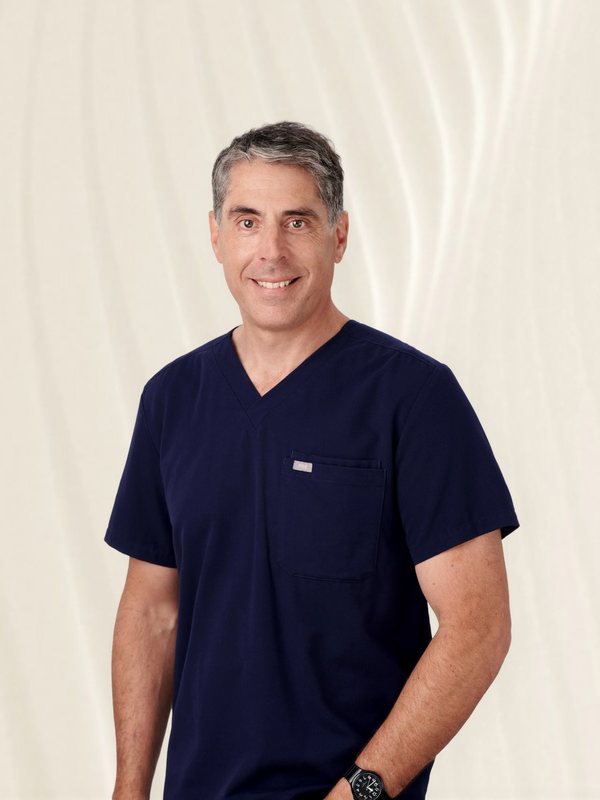
Dr. Thomas Buonassisi, MD, FRCSCAuthor · Reviewer
Dr. Thomas Buonassisi, MD, FRCSC — Otolaryngology – Head & Neck Surgeon with a practice limited to facial plastic surgery, 8 West Clinic, Vancouver, BC.
Dr. Buonassisi is certified by the American Board of Facial Plastic and Reconstructive Surgery (ABFPRS) and the American Board of Otolaryngology – Head and Neck Surgery (ABOHNS), and is a Fellow of the Royal College of Physicians and Surgeons of Canada (FRCSC) and the American Academy of Facial Plastic and Reconstructive Surgery (AAFPRS). He co-founded 8 West Clinic — a rhinoplasty-focused practice in Vancouver, BC — with his wife Angie Buonassisi, with two locations in Vancouver and North Vancouver, with patient education as a founding principle of the practice.
Dr. Buonassisi has been educating patients on rhinoplasty for over 15 years and has published hundreds of educational videos across YouTube and Instagram — with content going back over a decade. Every article and video in the Knowledge Hub is written or reviewed directly by Dr. Buonassisi.
Ultrasonic rhinoplasty is rhinoplasty in which the bone work is done with a piezotome, an ultrasonic device that cuts bone using high-frequency vibrations instead of a chisel. It's used for parts of the procedure such as reducing a hump, narrowing the nasal bones and making tiny holes for sutures. It's a tool chosen for the right patient, not a different operation.
Rhinoplasty has a lot of different parts. Some involve cartilage, mainly in the lower nose and tip, and some involve the nasal bones that form the upper part of the bridge. Ultrasonic rhinoplasty refers to using a piezotome, or ultrasound device, for the bone work.
According to Dr. Buonassisi, the parts of rhinoplasty where ultrasound is extremely useful include:
Reducing a hump on the bridge
Narrowing the nasal bones
Changing the height or width of the bridge
Drilling tiny holes in the bone so sutures can pass through and hold things in place
If someone only needs changes to the tip, such as narrowing or refining it, there's no reason to use the piezotome, because those structures are cartilage. Wherever the bones need to be modified, though, he finds it very helpful. The device also can't do the whole operation: other instruments are still needed, particularly for the cartilage.
Why use a piezotome instead of a chisel?
The main reason Dr. Buonassisi gives is accuracy. The nasal bones are thin, there's one on each side of the nose, and each has its own shape and length. To bring them inward, a surgeon can fracture them with a chisel, push them in by hand, or file them down with rasps. Those are all established methods, and he still uses a chisel himself.
The difference is control. When a bone is fractured with a chisel or pushed in manually, the fracture line can end up anywhere, not necessarily where the surgeon wants it. With a piezotome, Dr. Buonassisi makes a very gentle cut through the bone, which encourages it to fracture exactly where he intends. In the video, he shows this on the tongue depressor: light strokes, barely any pressure, and the wood doesn't even flex.
Because the device oscillates at a very high frequency, it can cut or remove bone without a lot of force. A chisel, by comparison, needs a small mallet and a fair bit of pressure to move through the tissue. He's careful to say the chisel is still effective and lots of surgeons use it. He simply finds the piezotome more predictable in his hands, especially when the nasal bones are thick.
He also likes to leave the soft tissue around the bone intact and keep the bone attached on its undersurface. That way the nasal bones can move inward but stay stable afterwards, which he shows in the demonstration as a controlled bend rather than a clean break.
How does the ultrasonic drill help narrow the nose?
Dr. Buonassisi also uses an ultrasonic drill for a technique that brings the nasal bones together. Once the bones are mobilized, he makes a tiny hole through the bone on one side, passes a stitch through it, and takes the stitch across to the bone on the other side. When he ties it, the suture draws the nasal bones inward and keeps them tight during healing.
He describes this as a way to narrow the nose bones without causing much trauma to them. With a regular drill, he finds it very difficult to reach the right spot, whereas the ultrasonic tool makes the hole gently in about five seconds. The drill isn't particularly sharp either, which he demonstrates by touching it to his own skin.
Does piezo rhinoplasty mean less bruising?
In Dr. Buonassisi's experience, bruising is typically less with ultrasonic rhinoplasty, at least early on. His explanation is about the surrounding tissue. Bone itself doesn't bleed a lot, whichever tool is used. Chisels are fairly large, though, and the soft tissues around them often get some damage and tend to bleed more.
That bleeding is what causes rhinoplasty bruising. In general, bleeding from the osteotomy sites, the places where the nasal bones are cut, tends to travel to the area around the eyes. Because the piezotome disturbs the soft tissue less, he notices less bruising in the first week.
He's also clear about the limits of that. Bruising goes away either way, and by three or four weeks after surgery he doesn't think it makes a big difference. Whatever tools are used, most people are socially presentable in about 1–2 weeks after rhinoplasty at 8 West, and final results take about 12 months to be visible.
When does Dr. Buonassisi choose the piezotome?
Not in every case. Dr. Buonassisi uses the piezotome often, but he's clear that it isn't necessary for every rhinoplasty and that there are situations where he doesn't need it. It depends on what each nose needs.
He finds it particularly useful in two situations. One is thick nasal bones. The other is when he wants to be very precise about how much he mobilizes the bones, for example in a preservation rhinoplasty. In general, preservation rhinoplasty is an approach centred on how the bridge is treated, keeping more of its natural structure rather than removing and rebuilding it.
That fits with how rhinoplasty works at 8 West. Every rhinoplasty Dr. Buonassisi performs is bespoke, and he uses the full range of rhinoplasty techniques, choosing between them for each patient's anatomy after a thorough consultation. The piezotome is one tool among many, and decisions about approach, such as closed vs scarless rhinoplasty, are made the same way.
How much does the tool matter compared with the surgeon?
Patients sometimes ask how ultrasonic rhinoplasty compares with traditional rhinoplasty. Dr. Buonassisi's answer is that it's difficult to say. In his view, what matters more is the experience of the surgeon. An ultrasound device doesn't give someone a good rhinoplasty on its own.
At 8 West, rhinoplasty is performed by Dr. Buonassisi, who has over 25 years of experience in facial plastic surgery and has performed over 2,500 rhinoplasties. The consultation is where he assesses your anatomy, explains what is and isn't achievable, and recommends an approach. Computer imaging is used to talk through goals, as a guide rather than a promise, and consultations have a fee.
A few questions you may want to ask:
Does the procedure involve bone work, or mainly the tip?
Would a piezotome be useful in this case, and why?
What can be expected for bruising in the early days?
Which other instruments or techniques would be used?
Yes, in the same way any rhinoplasty is. Dr. Buonassisi explains that ultrasonic rhinoplasty is no different from other rhinoplasty techniques here: the idea behind rhinoplasty is to make a long-term, permanent change to the nose. Using ultrasound for the bone work makes permanent changes, and so do the other surgical tools that are used during the procedure.
Does ultrasonic rhinoplasty still involve breaking the nose?
When the nasal bones need to move, yes, there is still a controlled fracture. The difference Dr. Buonassisi describes is that the piezotome makes a gentle cut through the bone first, so the bone fractures where he intends rather than anywhere along its length. He can also keep the bone attached on its undersurface so it moves inward but stays stable.
Does the piezotome cut soft tissue?
It's used on bone. Dr. Buonassisi explains that because the ultrasound works gently, the surrounding soft tissues aren't damaged the way they can be with larger instruments, and he says he could use it on his finger and it wouldn't do anything. Like any surgery, rhinoplasty still has risks, and these are discussed in detail at consultation.
Does ultrasonic rhinoplasty make surgery quicker?
Dr. Buonassisi says the powered device can make some steps of the bone work a little quicker. Making a hole for a suture, for example, takes him about five seconds. That's about the surgery itself, not recovery. After rhinoplasty at 8 West, most people are socially presentable in about 1–2 weeks, and final results take about 12 months to be visible.
Full Transcript
Ultrasonic rhinoplasty refers to the use of a piezotome or an ultrasound device to do the bone work involved in rhinoplasty. So rhinoplasty has lots of different components to it. The bone work, which is really hump production, narrowing of the nose bones. Sometimes we need to drill some tiny little holes so that we can put sutures through bone. Those are the parts of the rhinoplasty where ultrasound is extremely useful. So why do we use piezotome or ultrasound device in rhinoplasty? The main reason is for its accuracy. Now I don't use it in all cases. There are situations where I don't really need to use it. But when I have thick nose bones or if I wanna be very, very precise about how much I mobilize the nose bones, for example, in a preservation rhinoplasty, then I think the ultrasound is very useful for that. So as an analogy, what I'm gonna do is I'm gonna take this very thin tongue depressor, which is probably similar to the thickness of nose bones. So remember, the nose bone is on a block. There's a nose bone on each side of the nose. They're thin. They have a certain shape and length to them. If I want to make the nose bones come inwards, I can fracture them with a chisel. I can push them inwards. I can, you know, file them down with rasps. But what I like to do is make a very, very gentle cut through the nose bones, keeping all the soft tissue around it intact, and that helps to stabilize things after. So if I wanted to cut through the nose bone, for example, here, at that point, if I fracture that with a chisel or if I push it in sort of manually, that fracture line can be anywhere, and it may not necessarily fracture right where I want it to. With a piezotome, what I can do is I can take that fracture line, and I can actually encourage it to fracture exactly where I want it by cutting through the bone. So I'll show you how I do that. This is the actual tool that I use. And I basically just make a very gentle cut. I'm barely even pushing on this. You'll notice that the tongue depressor is not even flexing. It's not like I'm pushing **** ** it. It's very, very gentle strokes. So now that I've cut through the majority of the bone, in this case, tongue depressor, the tissues on the other side of the bone are still intact. And so once I've made that initial cut, I can fracture the nose bone exactly where I want it. So you'll notice that it's still attached on the undersurface, and we actually do that with rhinoplasty as well. If I want those nose bones to move in but be stable, I can maintain the attachments on the undersurface. So I find this is much more predictable than when I, when I just fracture it with a chisel. So you can sort of see I can get a little bit of a bend in the in the in the tongue depressor. In in the case with rhinoplasty, we're getting the nose bones to bend inwards. But it remains a bit more stable. So I like that. The other thing I'll sometimes do with the piezotome is once I've mobilized the nose bones, if I want them to stay in a very particular position, there's another little trick I like to use. This is an ultrasound drill. It's not actually sharp. I can touch myself with it. I wouldn't poke myself in the eye, but it would it's not particularly sharp. But I can actually make a hole with this. And so sometimes after I fracture the nose bones, I'll make a tiny little hole, and this is really easy to do and super fast. I make a little hole, and then I can put a stitch through the hole. One of the things I like to do if I wanna bring nose bones together, so if I've got a nose bone on one side that I wanna bring in and a nose bone on the other side that I wanna bring together, I often will use the piezo tom to drill a little hole through the nose bone, create a little space, and then I can put a suture through that. And then I can take that suture, bring it to the other side, and then when I tie the suture, it will bring the nose bone actively inward. And so it's a really nice way to narrow the nose bones, without causing much trauma to them. So a little hole in the nose bone plus a stitch across to the nose bone on the other side can can bring those nose bones together and keep them tight during the healing process. So, another great use for this. I find it very difficult to get a drill in there to drill these holes, whereas the Piazza Tome, I can make a hole through the nose bone that's just really gentle and takes me about five seconds. So you can see I've got a couple little holes in there already, and it's easy to do with the Piazza Tome. So, you know, again, there's different tools that can be used to do the fractures in the nose mold so that we can narrow the nose, which we wanna do in a lot of our cases, whether you use chisels or rasps or even saws. I think there's lots of different ways of doing it. I like the piezotone particularly when the nose bones are thick. I find it to be very accurate, and I do think it causes less bruising because it's not really traumatizing the surrounding tissue quite so much. Really useful tool. I use it all the time. It's not absolutely necessary in all cases, just depending on what I'm doing. But it speeds things up and it's very gentle. It's different from traditional techniques because we're use first of all, we're using a powered source to modify the nose bones so things can be done a little bit more quickly. The other thing is that because it's the ultrasound is is oscillating at a very, high frequency, we can actually make cuts in the nose bone or remove nose bones without actually having to put a lot of pressure on them. So if I were to use a chisel to fracture a nose bone, which I do, I have to put a fair bit of force on that with a little tiny mallet. So you need to sort of force the chisel through the tissues a little bit more firmly. Still an effective way to do it, and lots of people do it that way, but it does require a little bit more force. The other thing is that because we're doing it gently with ultrasound, the surrounding soft tissues are not damaged. I could use the ultrasound on my finger and it wouldn't do anything. So it's it's a nice, safe, and less traumatic way of mobilizing the nose bones or modifying them as part of the rhinoplasty. It's not all of it. You can't do the entire rhinoplasty just with ultrasound. There's other other devices and there's other instruments that you need to use, particularly on the cartilaginous parts of the nose. But this helps to speed up the process and I think is a little bit less, traumatic, than the techniques I used to use. We actually have patients ask if ultrasonic rhinoplasty is permanent, and it really is no different from other rhinoplasty techniques. The idea behind rhinoplasty is to make a long term permanent change to the known. Yes, using the ultrasound does make permanent changes, but so do the other surgical tools that we use. Bruising typically is less with ultrasonic rhinoplasty because we're traumatizing the surrounding tissues less. So generally speaking, the bone doesn't bleed a lot, whether you use a chisel or whether you use ultrasound. However, the surrounding soft tissues, because the chisels are quite large, often do get a bit of damage to them and they tend to bleed more. The bleeding results in bruising. So bleeding from osteotomy sites on the nose tends to travel to around the eye. So yes, I think that the amount of bruising that we get with ultrasonic rhinoplasty is less than when we use traditional instruments. But keep in mind, that bruising goes away either way. So long term, I don't think it makes a big difference for bruising three, four weeks after the surgery. But certainly in the first week, I notice the bruising is less. I think the ultrasonic rhinoplasty technique can be used in any rhinoplasty case where modifications to their bones are required. So if there's a case where someone just needs modification of the tip or narrowing of the tip, these are all cartilaginous structures. There's no reason to use or usefulness for the piezotome. However, if modification of the bridge height, the bridge width, the areas where we need to drill tiny little holes in the bone to secure things, then the piezo tom or the ultrasonic rhinoplasty tool is extremely helpful. The question was, is ultrasound or rhinoplasty better than traditional rhinoplasty? And, you know, I think that's difficult to say. The most important thing with rhinoplasty is the experience of your surgeon. So an ultrasound doesn't give you a good rhinoplasty. An experienced rhinoplasty surgeon is going to give you the best result.
[
{"href":"/rhinoplasty-knowledge-hub/what-exactly-is-rhinoplasty","title":"What Exactly Is Rhinoplasty?"},
{"href":"/rhinoplasty-knowledge-hub/male-vs-female-rhinoplasty-differences","title":"Male vs Female Rhinoplasty Differences"},
{"href":"/rhinoplasty-knowledge-hub/non-surgical-rhinoplasty-vs-surgical-rhinoplasty","title":"Non-surgical Rhinoplasty vs Surgical Rhinoplasty"},
{"href":"/rhinoplasty-knowledge-hub/two-day-post-op-dressing-suture-care","title":"Two Day Post-op Dressing & Suture Care"},
{"href":"/rhinoplasty-knowledge-hub/two-month-rhinoplasty-follow-up-results","title":"Two Month Rhinoplasty Follow-up Results"},
{"href":"/rhinoplasty-knowledge-hub/early-recovery-expectations-after-rhinoplasty","title":"Early Recovery Expectations After Rhinoplasty"},
{"href":"/rhinoplasty-knowledge-hub/common-nasal-features-patients-want-most","title":"Common Nasal Features Patients Want Most"},
{"href":"/rhinoplasty-knowledge-hub/setting-realistic-rhinoplasty-expectations","title":"Setting Realistic Rhinoplasty Expectations"},
{"href":"/rhinoplasty-knowledge-hub/hollys-rhinoplasty-consultation-journey","title":"Holly's Rhinoplasty Consultation Journey"},
{"href":"/rhinoplasty-knowledge-hub/closed-vs-scarless-rhinoplasty-explained","title":"Closed vs Scarless Rhinoplasty Explained"},
{"href":"/rhinoplasty-knowledge-hub/severe-septal-deviation-rhinoplasty-results","title":"Severe Septal Deviation Rhinoplasty Results"}
]