

Scarless rhinoplasty is usually another name for closed rhinoplasty, where all the incisions are made inside the nostrils. It's more of a marketing term than a separate technique, and closed rhinoplasty has been done for probably a hundred years. An open rhinoplasty adds a small incision on the underside of the nose, and the right approach depends on what needs to be done.
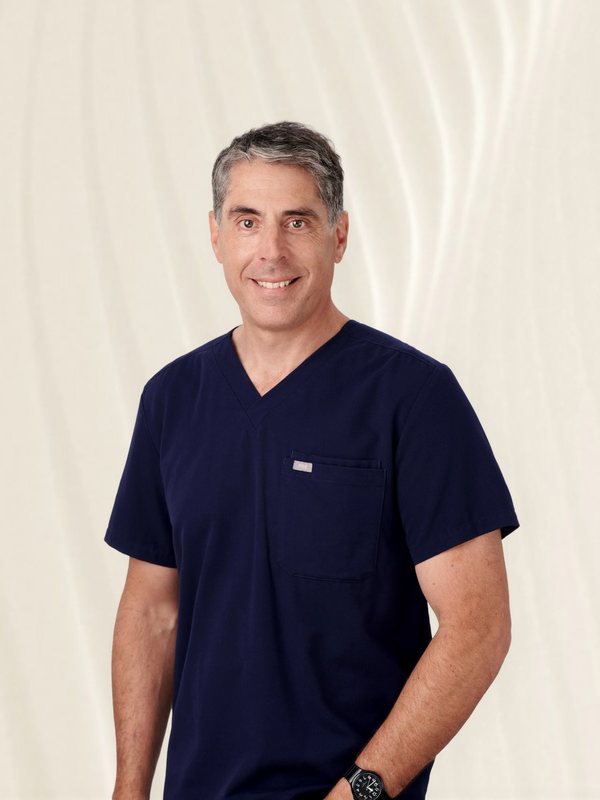
In this video, Dr. Thomas Buonassisi, MD, FRCSC, Specialist in Otolaryngology – Head and Neck Surgery, with a practice limited to facial plastic surgeries, explains what these terms mean and how he decides between the approaches. The patient in this video agreed to let us share it.
What is scarless rhinoplasty?
Dr. Buonassisi describes scarless rhinoplasty as really a marketing term, or catchphrase, for closed rhinoplasty. It isn't a new procedure. Closed rhinoplasty is something most rhinoplasty surgeons have done for probably a hundred years.
The name points to one feature of the closed approach. In general, all of the incisions are made inside the nostrils, so there's no incision on the outside of the nose, and that's where the idea of scarless comes from. There are still incisions, though, and they still heal. They're just hidden inside the nose.
He also makes a point that surprises some people. An open rhinoplasty leaves a scar that you can't really see, so in a sense you could call that scarless too. It depends how it's done, which is why the label on its own doesn't tell you much about what a surgeon will actually do.
What's the difference between open vs closed rhinoplasty?
In general, the two approaches differ in how the surgeon reaches the structures of the nose. In a closed rhinoplasty, the work is done through incisions inside the nostrils. In an open rhinoplasty, a small incision is added across the columella, the narrow strip of skin between the nostrils, which allows the skin to be lifted so the cartilage and bone can be seen directly.
Neither approach is right for every nose. In general, an open approach gives the surgeon a direct view of the structures, which some situations call for, while a closed approach avoids an external incision and can suit cases where that direct view isn't needed. What's being changed, and by how much, usually guides the choice.
In Dr. Buonassisi's practice, both closed and open rhinoplasty are used. Which one he recommends really depends on what needs to be done for each patient. You can read more about the range of approaches on our rhinoplasty techniques page.
Does an open rhinoplasty leave a visible scar?
An open rhinoplasty does leave a scar, because of the small incision across the columella. Dr. Buonassisi's point is that it's a scar you can't really see, which is why, in his view, the word scarless could describe either approach depending on how it's done.
In general, the columella incision is small and placed where it isn't obvious, and how any scar settles varies from person to person. If a rhinoplasty scar is a particular worry for you, it's a good thing to raise at consultation, so you can talk through which approach is recommended for your nose and why.
Is scarless rhinoplasty the same as preservation rhinoplasty?
No, and Dr. Buonassisi says the two shouldn't be confused. Preservation rhinoplasty is a technique specific to how the bridge of the nose is treated. Scarless, or closed, describes where the incisions go.
Because they describe different things, one doesn't decide the other. Whether the incision in the columella is visible or invisible is irrelevant to how the bridge is then treated. In general, a surgeon can use either an open or a closed approach and then choose separately how to work on the bridge.
It's an easy mix-up, because rhinoplasty terms often describe different parts of the operation. Some describe the approach, some a tool, and some what's done to a particular structure. Our page on ultrasonic piezo rhinoplasty covers one of those tools, and what exactly is rhinoplasty explains the basics.
Can you choose between open and closed rhinoplasty?
You can, says Dr. Buonassisi, but he'd suggest letting your surgeon make that choice. A surgeon can tell you which technique is likely to give a predictable, long-lasting and natural-looking result for your nose, and that depends on things you can't easily judge from the outside.
In general, the factors that guide the choice include:
- How much work the tip needs, and how detailed it is
- The strength and shape of the cartilage
- Skin thickness
- Whether the bridge, the tip or both are being changed
- Breathing and the structures inside the nose
Every rhinoplasty Dr. Buonassisi performs is bespoke. He works one-on-one with each patient and recommends an approach based on their anatomy and goals, not a preference for one method or one label.
How is closed rhinoplasty chosen at 8 West?
The decision is made at consultation, which is a critical step rather than a formality. It's where Dr. Buonassisi assesses your anatomy, explains what is and isn't achievable, and recommends open or closed rhinoplasty based on what needs to be done. Computer imaging is used to talk through goals, as a guide rather than a promise, and consultations have a fee.
Dr. Buonassisi has over 25 years of experience in facial plastic surgery and has performed over 2,500 rhinoplasties, across primary and ethnic rhinoplasty. Whichever approach is used, most people are socially presentable in about 1–2 weeks, and final results take about 12 months to be visible.
Questions worth bringing include:
- Would you recommend an open or closed approach, and why?
- Where would the incisions be?
- How will the bridge be treated?
- What should be expected as the incisions heal?
We see patients from Vancouver and North Vancouver. Our rhinoplasty page and free guide, The Essential Guide to Rhinoplasty, have more detail, and there are more short videos in the Rhinoplasty Knowledge Hub.
Frequently asked questions
Does closed rhinoplasty mean a shorter recovery?
Not necessarily. After rhinoplasty at 8 West, most people are socially presentable in about 1–2 weeks, and final results take about 12 months to be visible, whichever approach is used. In general, recovery varies from person to person and depends on what's done during surgery, so it's worth asking Dr. Buonassisi how it applies to your nose at consultation.
Why would a surgeon recommend open rhinoplasty?
In general, an open approach lets the surgeon lift the skin and see the cartilage and bone directly, which can help when the tip or the structure of the nose needs more detailed work. Dr. Buonassisi uses both open and closed rhinoplasty, and his recommendation depends on what needs to be done to give a predictable, long-lasting result.
Can preservation rhinoplasty be done with a closed approach?
Dr. Buonassisi explains that preservation rhinoplasty is about how the bridge is treated, and whether the incision in the columella is visible or invisible is irrelevant to that part of the procedure. In other words, the approach and the bridge technique are separate decisions. Which combination suits your nose is something he'd assess at consultation.
Will there be stitches on the outside of the nose?
It depends on the approach. In general, a closed rhinoplasty uses incisions inside the nostrils, so there are no external stitches from the incisions. An open rhinoplasty includes a small incision across the columella, which is closed with fine stitches. Dr. Buonassisi will explain what to expect for your procedure and how the incisions are cared for while they heal.