

A deviated septum rhinoplasty works on the inside of the nose as well as the outside, which matters when a nose looks crooked because the septum is bent. When the deviation is severe and involves both cartilage and bone, the internal structure is lined up before any refinements are made, so changes like tip rotation and hump reduction are built on a structure that's centred.
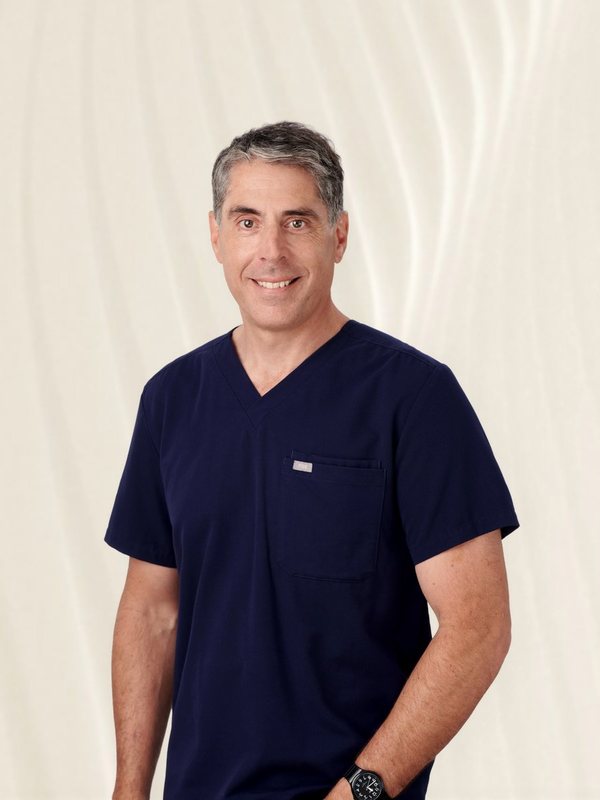
In this video, Dr. Thomas Buonassisi, MD, FRCSC, Specialist in Otolaryngology – Head and Neck Surgery, with a practice limited to facial plastic surgeries, talks through photos of a patient who had a very crooked nose and explains what was done during her rhinoplasty. The patient in this video agreed to share it.
What is a deviated septum?
The septum is the wall that divides the inside of the nose into two sides. In general, the front part is made of cartilage and the part further back is bone. When the septum is deviated, it's bent or shifted away from the midline.
A septum can be slightly off-centre without anyone noticing, but when the deviation is severe it can show on the outside too. Dr. Buonassisi explains that the patient in this video had quite a severe septal deviation, affecting both the cartilage and the bony part of the septum.
On her front view, he points out, the nose tilted quite a bit to the right. On her base view, which is the view from below, you could see that the whole tip of the nose had shifted off to one side.
Why does a crooked nose need work on the inside?
In general, the septum helps support the bridge and the tip, so when it leans to one side, the outside of the nose tends to follow. Working only on the outer shape wouldn't address what's holding it off-centre.
Dr. Buonassisi says it's really important in cases like this to get all of the internal anatomy lined up before anything else. Once that's done, the finishing touches can be added: tip rotation, tip refinement and hump reduction. Tip rotation refers to how much the tip turns up or down, and a hump is a bit of extra height along the bridge.
The order matters. Refining the tip or lowering a hump on a nose that's still leaning wouldn't give a balanced result, because the structure underneath would still be off to one side.
What happens to the bone in a deviated septum rhinoplasty?
In this patient's surgery, Dr. Buonassisi explains, the bony part of the septum was reduced and removed so that the bridge could be shifted. He used an ultrasonic tool for the bone work in her case because he wanted to be very controlled about where the bone cuts were made, so the bones would shift over easily without risking fracturing them.
He also used it for her septum. Because it was so crooked to one side, it needed to be brought back into the midline, and the ultrasonic tool was another way of creating a little space for that cartilage to move.
Ultrasonic instruments are one of the tools available in rhinoplasty, chosen for the right patient rather than used in every case. If you'd like to know more about how they work, see our ultrasonic piezo rhinoplasty FAQs.
Is septorhinoplasty the same as rhinoplasty?
In general, "septorhinoplasty" is the term for a rhinoplasty that includes work on the septum. Many people searching for help with a crooked nose come across the word and wonder whether it's a separate surgery.
At 8 West, septoplasty is only performed as part of a cosmetic rhinoplasty, never on its own. The septal work is one part of a single surgery aimed at a nose that looks natural and sits in balance with the face.
Every rhinoplasty Dr. Buonassisi performs is bespoke. He has over 25 years of experience in facial plastic surgery and has performed over 2,500 rhinoplasties, and he uses the full range of rhinoplasty techniques, choosing the approach that suits each patient's anatomy and objectives rather than favouring one method.
What about breathing after rhinoplasty?
Many people with a crooked nose also ask about breathing after rhinoplasty. In general, a septum that sits well off the midline can narrow the airway on one side, which is one reason the inside of the nose is part of the conversation.
At 8 West, looking natural and breathing well are treated as the same goal. That's why any concerns about breathing are worth raising at your consultation, so they can be considered alongside appearance. In general, it's also common for the nose to feel blocked for a while after surgery as healing settles.
What can a photo two months after surgery tell you?
The photos in this video were taken two months after surgery, which is still an early point. Most people are socially presentable in about 1–2 weeks, but final results take about 12 months, so the nose keeps settling well beyond the two-month mark.
Dr. Buonassisi describes the aim in this case as a nose that was straighter, and also a little more refined and more in keeping with her other facial features. That reflects the goal at 8 West: a nose that looks like you, just refined, with your identity kept intact.
Like any surgery, rhinoplasty has risks and trade-offs, and a more involved case can carry different considerations than a simpler one. These are reviewed with you at your consultation.
What should you ask if your nose is crooked?
If you're considering rhinoplasty in Vancouver and North Vancouver for a crooked nose, these questions can help at your consultation:
- Is the crookedness coming from the cartilage, the bone or both?
- How would the inside of the nose be lined up before any refinements?
- Which tools and techniques would suit this nose, and why?
- How might the changes affect breathing as well as appearance?
- What will the nose look like at two months compared with the final result at about 12 months?
Surgeon consultations at 8 West have a fee. The free Essential Guide to Rhinoplasty has more questions to bring, and the Rhinoplasty Knowledge Hub has more videos from Dr. Buonassisi.
Frequently asked questions
Can a severely deviated septum be addressed during rhinoplasty?
In general, yes. In this video, Dr. Buonassisi describes a case where both the cartilage and the bony part of the septum were severely deviated, and the internal anatomy was lined up before refinements to the tip and bridge. Whether the same approach suits you depends on your anatomy, which is assessed one-on-one at your consultation.
Does 8 West perform septoplasty on its own?
No. At 8 West, septoplasty is only performed as part of a cosmetic rhinoplasty, never on its own. When the septum is addressed, it's one part of a single surgery aimed at a nose that looks natural and works well. Looking natural and breathing well are treated as the same goal.
Why would a surgeon use an ultrasonic tool for the bone work?
In this patient's case, Dr. Buonassisi explains that he used an ultrasonic tool because he wanted to be very controlled about where the bone cuts were made, so the bones would shift over easily without risking fracturing them. It's one of several tools available, chosen for the right patient after a consultation rather than used in every case.
Will my nose feel blocked after a deviated septum rhinoplasty?
In general, it's common for the nose to feel blocked or stuffy for a while after rhinoplasty as healing settles. How long that lasts varies from person to person. Your follow-up visits are a good time to mention how your breathing feels, and any concerns about breathing are worth raising at your consultation before surgery.
How long does it take to see the final result of a crooked nose rhinoplasty?
Most people are socially presentable in about 1–2 weeks, but final results take about 12 months. A photo taken two months after surgery, like the ones in this video, shows an early stage of healing. The nose continues to settle over the following months, so it's worth being patient before judging the final shape.