RhinoplastyRhinoplasty at 8 WestOver 2,500 rhinoplasty procedures performed. Dr. Buonassisi is one of Canada's most experienced facial plastic surgeons.
TechniquesRhinoplasty TechniquesEvery approach available — open, closed, preservation, ethnic, revision & more. The right technique is chosen for your anatomy.
Before & AfterReal Patient ResultsEvery case performed by Dr. Buonassisi. Unretouched photos published with patient consent — use filters to find cases matching your anatomy.
Why 8 WestWhy Rhinoplasty at 8 WestRhinoplasty is the only procedure Dr. Buonassisi performs. 4,000+ procedures, 25 years of focused practice, accredited facility.
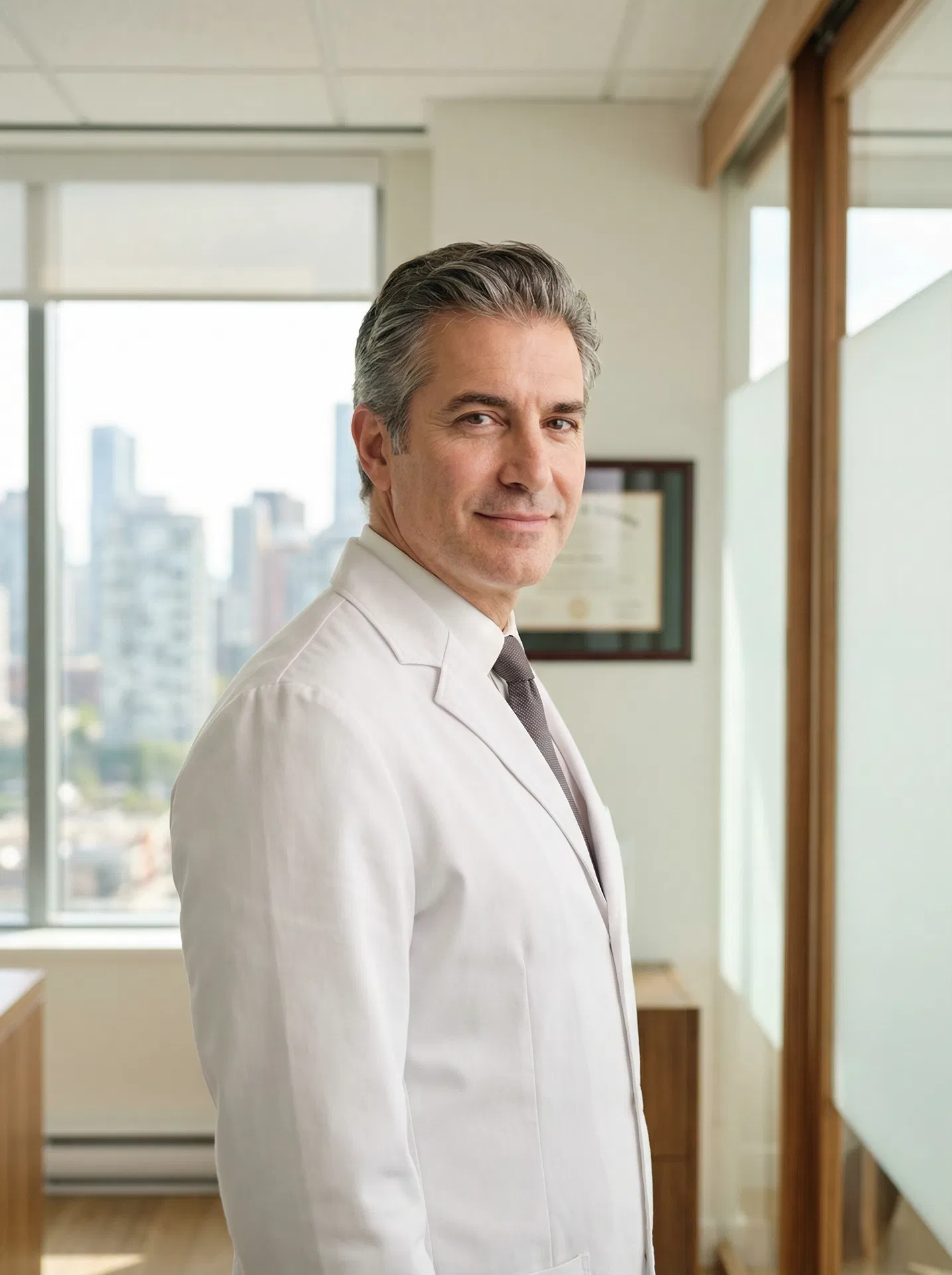
Dr. Thomas Buonassisi, FRCSC, ABFPRSAuthor · Reviewer
Facial Plastic Surgeon · Founder, 8 West Clinic · Vancouver, BC
Dr. Buonassisi is a dual board-certified facial plastic surgeon with over 25 years of experience in facial surgery exclusively. He has performed over 2,500 rhinoplasties and is the founder of 8 West Clinic in Vancouver. All content in the Knowledge Hub is written or reviewed directly by Dr. Buonassisi.
FRCSCABFPRSAAFPRSABOHNS
Free Resource
The Vancouver Rhinoplasty Guide
40+ pages written by Dr. Buonassisi. Candidacy, techniques, recovery, costs, and how to choose a surgeon. Free — no commitment required.
<h2>Understanding the Recovery Timeline for Rhinoplasty</h2><p>For many patients considering rhinoplasty, the recovery timeline is a crucial aspect to understand. Dr. Thomas Buonassisi, MD, FRCSC — Specialist in Otolaryngology – Head and Neck Surgery, with a practice limited to facial plastic surgeries — provides insights into what patients can expect during their recovery period. With over 25 years of experience in facial plastic surgery, Dr. Buonassisi emphasizes the importance of planning your time off work or school to ensure a smooth healing process.</p><p>In this video, Dr. Buonassisi explains that the amount of time needed off work or school varies depending on the individual's job requirements and personal recovery. While some may return to sedentary work from home the day after surgery, others may need more time if their job requires physical activity or a presentable appearance.</p><h2>What to Expect in the First Week After Rhinoplasty</h2><p>Immediately following rhinoplasty, patients typically go home a few hours after the procedure. During the first week, a cast will be placed on the nose, and patients may experience some bruising around the eyes and cheeks. Dr. Buonassisi notes that while the initial recovery is not generally painful, some bleeding may occur as the local anesthetic wears off. This is usually manageable with gauze and rarely requires additional intervention.</p><p>Patients are advised to take it easy during the first week, focusing on rest and minimal activity. Sedentary tasks can be resumed, but any strenuous activity should be avoided to facilitate healing. The cast remains on the nose throughout this period, and patients are encouraged to relax and allow their body to recover.</p><h2>Returning to Work or School: What to Consider</h2><p>Dr. Buonassisi suggests that most patients can return to work or school between eight and ten days after their rhinoplasty. By this time, the cast is typically removed, making it easier to camouflage any remaining bruising with makeup. However, the exact timing can vary based on the nature of the patient's job and their personal healing process.</p><p>For those with physically demanding jobs, it may be wise to extend the recovery period to ensure complete healing before resuming such activities. The key is to listen to your body and consult with your surgeon to determine the appropriate time to return to your regular routine.</p><h2>Long-Term Healing and Changes Post-Rhinoplasty</h2><p>While the initial recovery phase is crucial, Dr. Buonassisi explains that the nose continues to heal and change over the course of a year. The most significant changes occur within the first few weeks, with the healing process gradually slowing down. Patients should be aware that while the nose will look presentable relatively soon after surgery, complete healing takes time.</p><p>It's important to understand that natural changes in the nose will continue as one ages. Rhinoplasty provides a refined shape, but does not halt the natural aging process. Over time, subtle changes may occur, but these are part of the natural evolution of the facial structure.</p><h2>Support and Guidance During Your Recovery</h2><p>Dr. Buonassisi and his team at 8 West Clinic are dedicated to providing comprehensive support throughout your rhinoplasty journey. Patient care coordinators are available to address any questions or concerns you may have during your recovery. This support ensures that you are well-informed and comfortable with each step of the process.</p><p>Understanding the recovery timeline and what to expect can help alleviate anxiety and prepare you for a successful outcome. With the right guidance and care, you can achieve the aesthetic and functional results you desire from your rhinoplasty.</p>
Full Transcript
How much time should I take off, from school or work after having rhinoplasty? You know, it really depends on the person and what you do for work. You will have a cast in your nose, and in most cases, you'll have bruising, around the eyes and in in the cheeks. And I think if you have to look very presentable, at work, then, you know, it's unlikely that you can go to work in the first week. Now if you're working from home and you're you're not being seen on camera or or communicating with somebody on a on a computer screen, I think the following day you could certainly do some work from home, and you could definitely be doing homework. So it's not an excuse to not do your homework just because you had a rhinoplasty. Now after a week, your cast will come off. It's much easier to camouflage your cheeks and your eyes if you don't have a cast on your nose, and so often people will go back to work the second week. It all also depends on how sedentary your job is. If you're doing heavy lifting or bending over and you have a very physical job, I'd suggest that you wait a couple weeks before going back to work. But I think on average people probably go back to work or school between eight and ten days after their rhinoplasty. They're probably not looking perfect at that point, but it's very acceptable in most cases. A little bit longer if you do something that's very physical. What to expect after your surgery in the recovery period. You'll go home a couple hours after your surgery, and usually you have a gauze underneath the nose to catch a little bit of blood that will come down from your nose. You'll have a cast on the bridge of your nose. It's not generally painful. There is some local anesthetic in the nose that's probably still having some effect when you go home. What I often get calls about or questions about is that the nose will start to bleed a little bit after the surgery, and that sometimes happens four or five hours after the surgery when some of the medication that we put in the nose starts to wear off. Once the bleeding starts, it just gets caught on the gauze dripper that we apply, and that stops on its own. It's very uncommon for that to be excessive or to not stop. If it's a problem or a concern for patients, then they call me and I'll see them immediately, but that's very uncommon. So let's talk about what to expect during your rhinoplasty recovery. It's very common to questions and concerns about your recovery. We have a whole team of patient care coordinators who will talk you through it, give you all the information that you're gonna need to prepare for your surgery, and they're always available, if you have questions or concerns post operatively. So after the the first night, you'll still have your cast on for the remaining week, but usually bleeding has, stopped by day two. You are gonna still have some secretions, from your nose that you might wanna catch on the gauze, but many patients will take the gauze off and just, do their day to day activities, with only the cast on the bridge of their nose. Again, it's not particularly painful. I I will prescribe a pain medication and some patients take it, but, often it's not necessary. You'll be on an antibiotic to try and minimize the risk of infection postoperatively. So the first week is is really just staying at home and relaxing. There's probably not a lot you're gonna be doing. You could do a little bit of work as long as it's sedentary, but plan to just really have a low key week after the surgery. So the second week your cast comes off, that's easy. You can do that at home, many patients come to the office and one of our staff members will do that for them. It's not painful and it just takes a couple of minutes. Once the cast is off, it's certainly a lot easier to camouflage the fact that you had a rhinoplasty. So makeup on bruised areas, you can put a little bit of makeup on the nose gently, but usually within a few days of taking the cast off, people look pretty good and I think you could probably walk down the street, and not really look like you've had any surgery done. That doesn't mean you're completely healed, but you you will definitely be presentable at that point. After that, the healing process starts to decelerate. You'll you'll see changes in your nose quite dramatically in the first few weeks, and then those changes start to slow down, but probably the nose is is fully healed at about a year, and maybe changes a little bit even beyond that, but the degree of change after a year, it really has slowed down. Now, don't forget, your nose is gonna continue to change as you get older, and that's not something that the rhinoplasty really prevents, but you'll just be starting with a shape that is nicer, and then as you age, of course, your skin changes and sometimes the tip cartilages become a little softer, and so there are some natural changes that will occur regardless of whether you've had rhinoplasty.
[{"href":"/rhinoplasty-knowledge-base/dr-buonassisi-cast-removal-and-nasal-taping-with-ashley-at-1-week-post-rhinoplasty","title":"Dr. Buonassisi: Cast Removal and Nasal Taping with Ashley at 1 Week Post Rhinoplasty"},{"href":"/rhinoplasty-knowledge-base/dr-buonassisi-explains-body-dysmorphic-disorder-and-rhinoplasty","title":"Dr. Buonassisi Explains Body Dysmorphic Disorder and Rhinoplasty"},{"href":"/rhinoplasty-knowledge-base/dr-buonassisi-answers-how-is-rhinoplasty-computer-imaging-different-to-self-photoshopping","title":"Dr. Buonassisi Answers: How is Rhinoplasty Computer Imaging Different to Self Photoshopping"},{"href":"/rhinoplasty-knowledge-base/dr-buonassisi-talks-about-4-iffy-rhinoplasty-requests","title":"Dr. Buonassisi Talks About 4 Iffy Rhinoplasty Requests"},{"href":"/rhinoplasty-knowledge-base/drbuonassisiexplainhealthconcernsforrhinoplastyv1-1080p","title":"dr._buonassisi_explains_health_concerns_for_rhinoplasty_v1 (1080p)"},{"href":"/rhinoplasty-knowledge-base/sample-title-3-x-explained","title":"Sample Title 3: X Explained"}]