RhinoplastyRhinoplasty at 8 WestOver 2,500 rhinoplasty procedures performed. Dr. Buonassisi is one of Canada's most experienced facial plastic surgeons.
TechniquesRhinoplasty TechniquesEvery approach available — open, closed, preservation, ethnic, revision & more. The right technique is chosen for your anatomy.
Before & AfterReal Patient ResultsEvery case performed by Dr. Buonassisi. Unretouched photos published with patient consent — use filters to find cases matching your anatomy.
Why 8 WestWhy Rhinoplasty at 8 WestRhinoplasty is the only procedure Dr. Buonassisi performs. 4,000+ procedures, 25 years of focused practice, accredited facility.
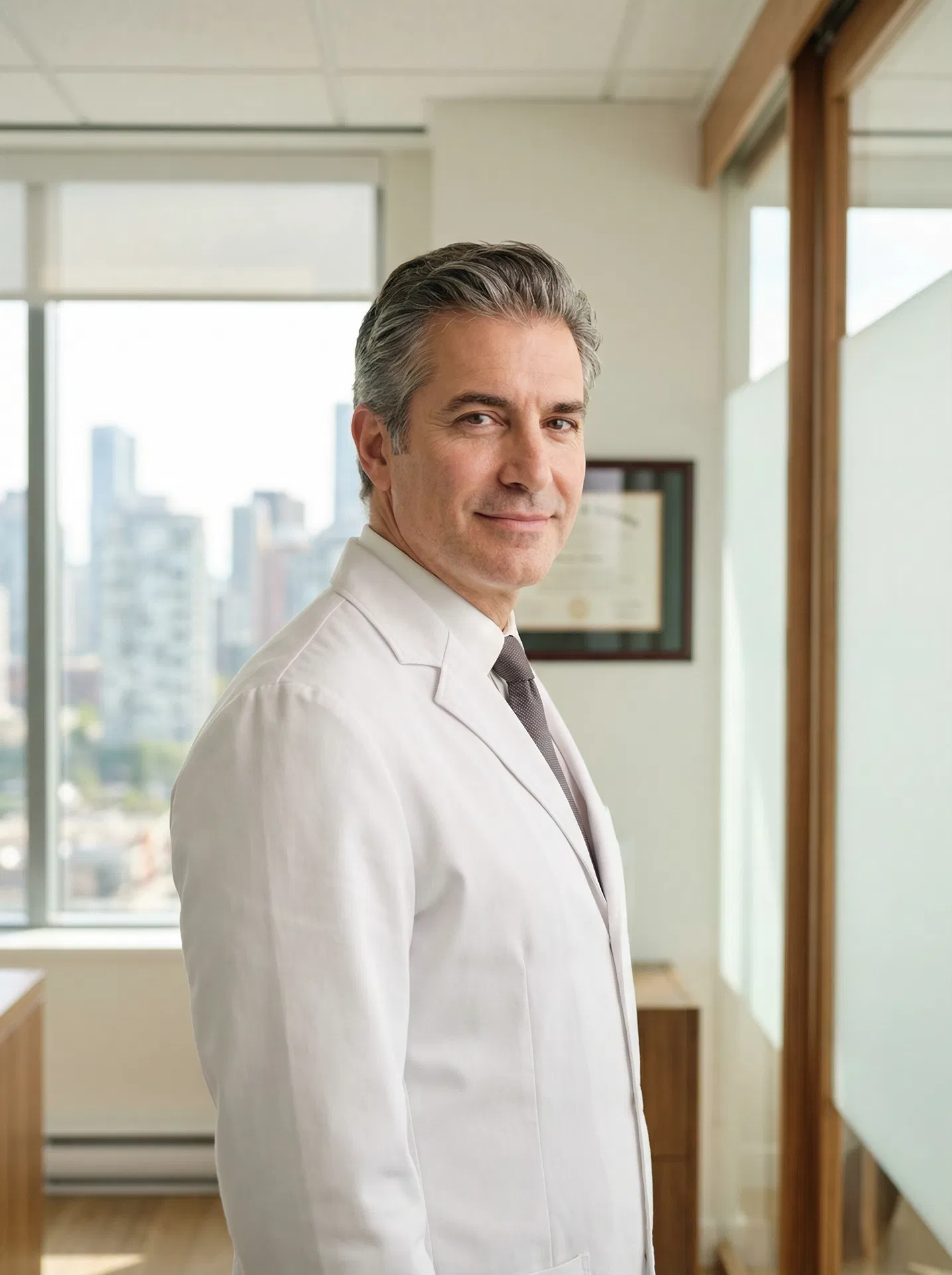
Dr. Thomas Buonassisi, FRCSC, ABFPRSAuthor · Reviewer
Facial Plastic Surgeon · Founder, 8 West Clinic · Vancouver, BC
Dr. Buonassisi is a dual board-certified facial plastic surgeon with over 25 years of experience in facial surgery exclusively. He has performed over 2,500 rhinoplasties and is the founder of 8 West Clinic in Vancouver. All content in the Knowledge Hub is written or reviewed directly by Dr. Buonassisi.
FRCSCABFPRSAAFPRSABOHNS
Free Resource
The Vancouver Rhinoplasty Guide
40+ pages written by Dr. Buonassisi. Candidacy, techniques, recovery, costs, and how to choose a surgeon. Free — no commitment required.
<h2>What Qualifies You as a Candidate for Rhinoplasty?</h2> <p>Determining candidacy for rhinoplasty involves a combination of personal reflection and professional assessment. First and foremost, it's essential to consider whether you feel this procedure is necessary for you. Are there specific irregularities in your nose that you wish to address? Do you believe that a subtle change could enhance your appearance and boost your confidence? These are crucial questions to ask yourself before proceeding.</p> <p>Additionally, it's important to recognize that while rhinoplasty can improve the aesthetics of your nose, perfection is not guaranteed. Accepting that your nose may not be flawless after surgery is vital. This mindset helps set realistic expectations and prepares you for the journey ahead.</p> <h2>How Does Your Surgeon Evaluate Candidacy?</h2> <p>Your surgeon plays a pivotal role in determining whether you are a suitable candidate for rhinoplasty. They will assess not only the physical aspects of your nose but also your overall health and emotional readiness for the procedure. It's essential that the changes you desire are feasible and align with the principles of rhinoplasty.</p> <p>Surgeons will evaluate the structural aspects of your nose, such as the bridge, tip, and angles. However, it's important to note that rhinoplasty cannot alter skin thickness or texture. Understanding these limitations is crucial for setting realistic goals for your surgery.</p> <h2>What Health Factors Are Considered for Rhinoplasty?</h2> <p>Health is a significant factor in determining candidacy for rhinoplasty. Surgeons look for patients who are both physically and emotionally healthy. Physical health ensures that you can safely undergo anesthesia and recover from surgery without complications. Emotional health is equally important, particularly for younger patients who may not yet be ready to handle the changes that come with rhinoplasty.</p> <p>Before moving forward, your surgeon will conduct a thorough evaluation of your medical history and current health status to ensure you are a suitable candidate for surgery. This assessment helps minimize risks and ensures a smoother surgical experience.</p> <h2>What Should You Understand About the Benefits and Risks?</h2> <p>Understanding the benefits and risks associated with rhinoplasty is crucial for making an informed decision. Your surgeon will discuss the potential outcomes of the surgery, as well as the possible risks involved. It's important to listen carefully and ask questions to ensure you fully grasp what the procedure entails.</p> <p>Patients should be aware that while rhinoplasty can enhance the appearance of the nose, it is not a solution for broader life issues. Having realistic expectations about the surgery's impact on your life can lead to a more positive experience and satisfaction with the results.</p> <h2>How Can You Set Realistic Expectations for Your Surgery?</h2> <p>Setting realistic expectations is essential for anyone considering rhinoplasty. A successful outcome depends on both the surgeon's skills and your understanding of what can be achieved. One effective way to visualize potential changes is through computer imaging. This technology allows you to see simulated results based on your unique facial features.</p> <p>By collaborating with your surgeon to explore these images, you can gain a clearer understanding of the possible changes to your nose. This collaborative approach ensures that both you and your surgeon are aligned in terms of the desired outcome, paving the way for a more satisfying surgical experience.</p>
Full Transcript
So what makes a patient a candidate for surgery? I think you have to think about it in terms of of your own perspective. Are you a candidate for yourself? And does the surgeon feel that you're a candidate for surgery? So the issues that you have to think about for yourself are, is this procedure something that I really need? Do you have an irregularity on your nose? Or do you have a shape to your nose that really doesn't suit you? Does making a small change to it really make a difference for you? The other is that can you accept that your nose is probably not perfect now and it probably won't be perfect after surgery, and is that something that you can live with? Do you have a reasonable attitude about, what this procedure is gonna do for you? Then you have to think about, from a surgeon's perspective, whether or not a surgeon feels that you should have this done, and that's really what being a candidate means. It means, is this a good idea? Should you have a surgery like this? Perhaps you shouldn't. From a surgeon's perspective, we want to make sure that the changes a patient wants to make to their nose are actually possible. They don't defy the laws of physics. There are things that rhinoplasty is really good at. For example, taking down a bridge, making a hump smaller, bringing a tip up, changing the angles of a nose on a patient's face. What it's not good at at all is making someone with thick skin have thin skin. It doesn't do that. Surgery is there to change the framework of the nose but has no potential to change someone's skin. So if you've decided that you think you're a candidate, then you have to be open minded about discussing your surgery with the surgeon because the surgeon ultimately needs to decide if you're a candidate for surgery or not. So there's four things that I look at to determine if I think a patient is a candidate for surgery. So the first thing I look at is whether or not a person is healthy enough to have surgery, and I think that's both physically healthy, but also emotionally healthy enough to have this done. For that reason, we're a little bit cautious about suggesting rhinoplasty in patients who are too young, because we're not entirely sure that they're emotionally ready for that. Being physically ready really just means that you're healthy and that you're not gonna have undue risk having an anesthetic or complications from surgery because of your underlying health. The second thing I'm looking for when I assess candidacy is whether or not somebody really understands the benefit of surgery and truly understands the risk. I want people to listen when I'm talking about the risks, their medical and their cosmetic risks with rhinoplasty, And I need to believe that they've taken the time to understand those risks. That's a very big discussion when talking about the benefits and risks of surgery, and that's something that we would cover in greater detail in another video. The third thing is that patients have realistic expectations for what a rhinoplasty is going to do for them. A rhinoplasty is going to change their nose. It's not going to change their life. And I think if they realize that and they understand that, that's a much healthier way to go into the surgery. In addition to that, I want us to both be on the same page about the types of changes that can realistically be made. The way I find the most helpful to achieve that is to do computer imaging on their photos. Rather than having a patient come in with someone else's nose and saying, well, I want to look like that. I think what works best is for me to make some modifications to their nose with a computer imaging program so that they can see what a new nose on their face would look like. And I think that's really the best way for someone to assess whether or not they like their new look. And if we're on the same page, in that I'm showing them features that I can change realistically with surgery, and they like the way those look, I think that's probably a good fit. The last thing is that a good candidate for rhinoplasty is someone that really needs to have a rhinoplasty. In the end it is partly a decision that I have to make, but also partly a decision that patients need to think long and hard about. There are some features, when changed, categorically make noses look better, and I think they're fairly universal. There are some features that when changed, make noses look different, but not necessarily better. And I think we need to avoid those types of things. So if someone has a very particular shape or very particular feature that they want to bring out in their nose, but it's not classically, you know, an aesthetically pleasing feature or it isn't going to necessarily make the nose look better in general, I would avoid suggesting surgery in cases like that. I always find it very difficult to say no to patients. They've often thought that having a rhinoplasty was going to make a big change to their nose or a big change to their life, but you know I think if a surgeon says no to you when you're requesting a rhinoplasty or any other type of cosmetic surgery, you should really look at that as them doing you a favor. We really are in no rush to operate on people that aren't going to have a significant benefit, and I think it's to the patient's detriment in the end to have surgery that they don't really need. Thanks for listening, and check back regularly for new questions and my honest answers about rhinoplasty.
[{"href":"/rhinoplasty-knowledge-base/dr-buonassisi-cast-removal-and-nasal-taping-with-ashley-at-1-week-post-rhinoplasty","title":"Dr. Buonassisi: Cast Removal and Nasal Taping with Ashley at 1 Week Post Rhinoplasty"},{"href":"/rhinoplasty-knowledge-base/dr-buonassisi-explains-body-dysmorphic-disorder-and-rhinoplasty","title":"Dr. Buonassisi Explains Body Dysmorphic Disorder and Rhinoplasty"},{"href":"/rhinoplasty-knowledge-base/dr-buonassisi-answers-how-is-rhinoplasty-computer-imaging-different-to-self-photoshopping","title":"Dr. Buonassisi Answers: How is Rhinoplasty Computer Imaging Different to Self Photoshopping"},{"href":"/rhinoplasty-knowledge-base/dr-buonassisi-talks-about-4-iffy-rhinoplasty-requests","title":"Dr. Buonassisi Talks About 4 Iffy Rhinoplasty Requests"},{"href":"/rhinoplasty-knowledge-base/drbuonassisiexplainhealthconcernsforrhinoplastyv1-1080p","title":"dr._buonassisi_explains_health_concerns_for_rhinoplasty_v1 (1080p)"},{"href":"/rhinoplasty-knowledge-base/sample-title-3-x-explained","title":"Sample Title 3: X Explained"}]