Candidacy Consultation
2:05
dr._buonassisi_explains_health_concerns_for_rhinoplasty_v1 (1080p)
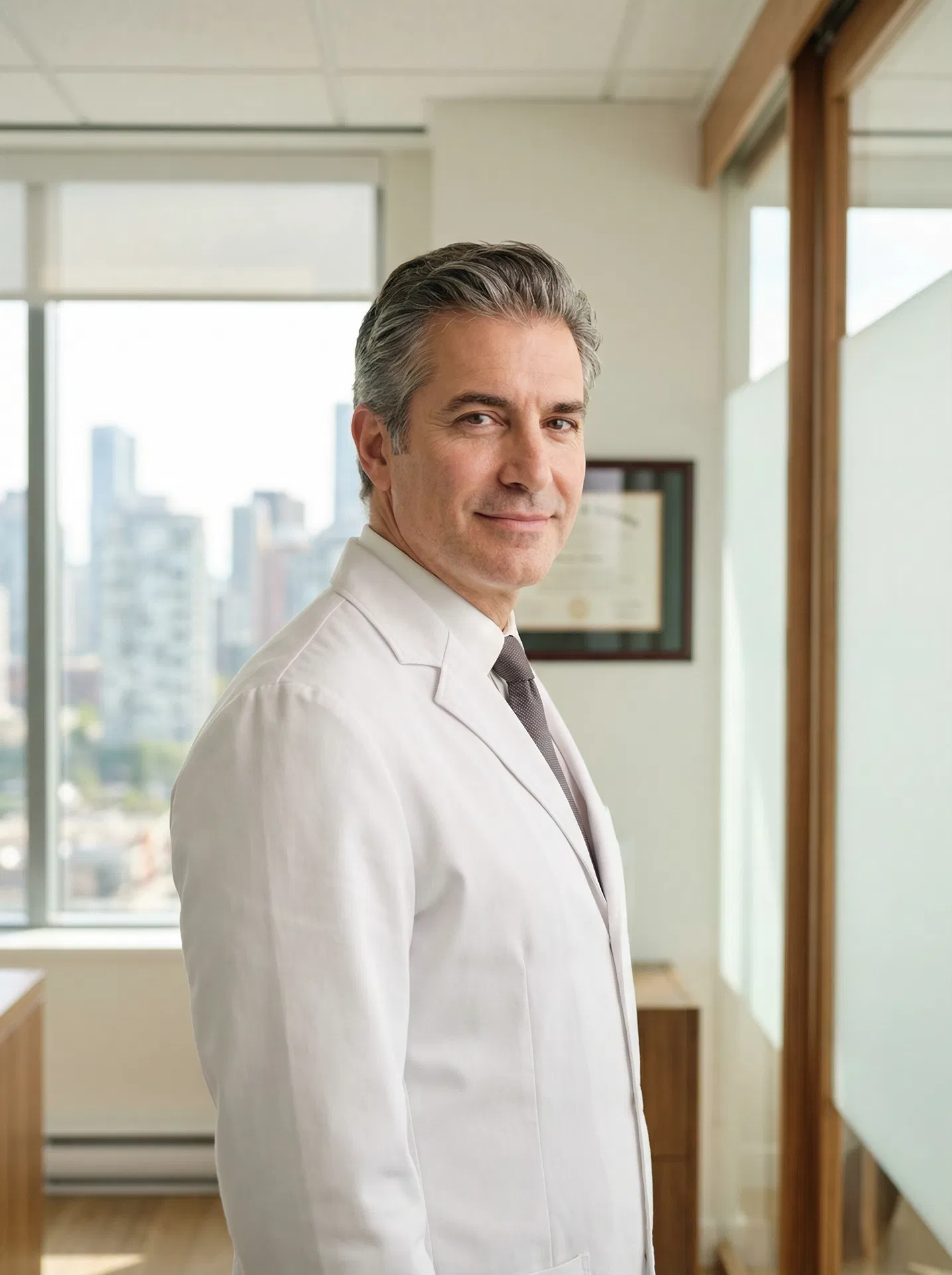
Dr. Jonathan Buonassisi
Facial Plastic Surgeon · 8 West Clinic, Vancouver
Published June 2026
·
Medically reviewed by Dr. Buonassisi
Key Takeaways — In This Video
Dr. Buonassisi · dr._buonassisi_explains_health_concerns_for_rhinoplasty_v1 (1080p)
Dr. Thomas Buonassisi, FRCSC, ABFPRS
Author · Reviewer
Facial Plastic Surgeon · Founder, 8 West Clinic · Vancouver, BC
Dr. Buonassisi is a dual board-certified facial plastic surgeon with over 25 years of experience in facial surgery exclusively. He has performed over 2,500 rhinoplasties and is the founder of 8 West Clinic in Vancouver. All content in the Knowledge Hub is written or reviewed directly by Dr. Buonassisi.
FRCSC
ABFPRS
AAFPRS
ABOHNS
<h2>Am I Healthy Enough for Rhinoplasty?</h2> <p>Before undergoing rhinoplasty, it's essential to assess your overall health. Most patients seeking this procedure are typically between the ages of fifteen and fifty, and the likelihood of having significant health issues that would prevent surgery is quite low. However, certain medical conditions can impact your eligibility for rhinoplasty, and it's crucial to discuss these with your surgeon.</p> <p>One of the primary concerns is the use of blood thinners. If you have a clotting disorder that requires you to take these medications, rhinoplasty may not be advisable. The nose is highly vascular, meaning it has a rich blood supply, and excessive bleeding during or after the surgery can pose serious risks. Therefore, patients on blood thinners should consider alternative treatments or delay their surgery until they can safely discontinue these medications.</p> <h2>What Health Conditions Might Delay My Surgery?</h2> <p>While many health conditions won't outright prevent you from having rhinoplasty, some may require further evaluation or delay your procedure. For instance, low hemoglobin levels, which can be common in some female patients, may necessitate additional testing. Anemia can increase the risk of bleeding during and after surgery, so ensuring your hemoglobin and iron levels are within a normal range is vital before proceeding.</p> <p>In addition to anemia, other health factors may also affect the timing of your surgery. If you are pregnant, for example, rhinoplasty is not recommended. It's essential to be in optimal health to minimize any risks associated with anesthesia and surgical complications. Consulting with your surgeon about your specific health status is key to determining the right timing for your procedure.</p> <h2>How Do Anesthetic Risks Affect My Rhinoplasty?</h2> <p>Rhinoplasty is an elective procedure, and one of the main goals is to keep your risk of complications as low as possible. Any health conditions that could heighten the risks associated with anesthesia should be carefully considered before scheduling your surgery. Your surgeon will conduct a thorough evaluation to identify any potential issues that could complicate the procedure.</p> <p>Patients with respiratory issues, cardiovascular conditions, or other significant health concerns may face increased risks during anesthesia. It's crucial to communicate openly with your surgeon about your medical history and any current health issues. This transparency will help ensure that your rhinoplasty is performed safely and effectively.</p> <h2>What Should I Discuss with My Surgeon?</h2> <p>Before undergoing rhinoplasty, it's important to have a comprehensive discussion with your surgeon about your health history and any concerns you may have. Prepare a list of questions regarding your health status, potential risks, and the specifics of the procedure. This dialogue is essential for establishing a clear understanding of what to expect and how to prepare for surgery.</p> <p>Additionally, your surgeon may recommend pre-operative tests, such as blood work, to ensure that you are in optimal health. These tests can help identify any underlying issues that may need to be addressed before your surgery. Being proactive about your health can significantly contribute to a smoother surgical experience and recovery.</p> <h2>What Are the Cosmetic Considerations for Rhinoplasty?</h2> <p>While health concerns are crucial, it's also important to understand the cosmetic implications of rhinoplasty. Many patients focus on the aesthetic outcomes of the procedure, which can include changes to the shape, size, and overall appearance of the nose. However, potential cosmetic complications should also be discussed with your surgeon.</p> <p>Common cosmetic concerns may include asymmetry, changes in skin texture, or dissatisfaction with the final results. It's vital to have realistic expectations and to communicate your goals clearly with your surgeon. This collaborative approach helps ensure that your desired outcomes align with what is surgically feasible, leading to greater satisfaction post-procedure.</p>
Full Transcript
My name is Doctor. Bonesisi and I'm a board certified facial plastic surgeon with a practice in Vancouver, Canada. I've been specializing in cosmetic rhinoplasty for almost twenty years and I'm here to answer your questions about this very interesting procedure. Happy patients are educated patients and that's why every question is a good one. So another question is whether or not you're healthy enough to have a rhinoplasty. You know most rhinoplasty patients are fairly young. The typical age ranges from sort of fifteen to fifty and on average you know I think it's very unlikely that you have any health conditions that preclude you from having this type of surgery. The things that would prevent you though are the need for being on blood thinners. So if you have to take a blood thinner for a clotting disorder or something like that, you really shouldn't have rhinoplasty. The nose is a very vascular structure. We don't want you to have excessive bleeding because you need to take blood thinners. Some of the other health conditions that don't necessarily prevent you from having surgery but might delay the procedure are having low hemoglobin. Some of our female patients may be slightly anemic. You can get some bleeding after rhinoplasty, so we want to make sure that your hemoglobin and iron levels are normal prior to surgery, and sometimes that requires a blood test before we can book your surgery. Obviously, can't have surgery when you're pregnant, but, you know, otherwise, most of our patients are healthy enough to have this. Just keep in mind that this is an elective procedure. We want your risk to be zero. So any health conditions that would increase the risk of having an anesthetic or increase the risk of bleeding are reasons to not have this surgery. So most people don't have health concerns that are risky. I think what's more important with rhinoplasty are what are the potential cosmetic complications of the surgery, and that is something we'll talk about even further. Thanks for listening, and check back regularly for new questions and my honest answers about rhinoplasty.
[{"href":"/rhinoplasty-knowledge-base/dr-buonassisi-cast-removal-and-nasal-taping-with-ashley-at-1-week-post-rhinoplasty","title":"Dr. Buonassisi: Cast Removal and Nasal Taping with Ashley at 1 Week Post Rhinoplasty"},{"href":"/rhinoplasty-knowledge-base/dr-buonassisi-explains-body-dysmorphic-disorder-and-rhinoplasty","title":"Dr. Buonassisi Explains Body Dysmorphic Disorder and Rhinoplasty"},{"href":"/rhinoplasty-knowledge-base/dr-buonassisi-answers-how-is-rhinoplasty-computer-imaging-different-to-self-photoshopping","title":"Dr. Buonassisi Answers: How is Rhinoplasty Computer Imaging Different to Self Photoshopping"},{"href":"/rhinoplasty-knowledge-base/dr-buonassisi-talks-about-4-iffy-rhinoplasty-requests","title":"Dr. Buonassisi Talks About 4 Iffy Rhinoplasty Requests"},{"href":"/rhinoplasty-knowledge-base/drbuonassisiexplainhealthconcernsforrhinoplastyv1-1080p","title":"dr._buonassisi_explains_health_concerns_for_rhinoplasty_v1 (1080p)"},{"href":"/rhinoplasty-knowledge-base/sample-title-3-x-explained","title":"Sample Title 3: X Explained"}]
← Previous Article
Next Article →
Ready to take the next step?
Start with a free instant pre-assessment.
Answer a few questions about your goals and anatomy. Dr. Buonassisi's team will review your submission and respond within one business day.