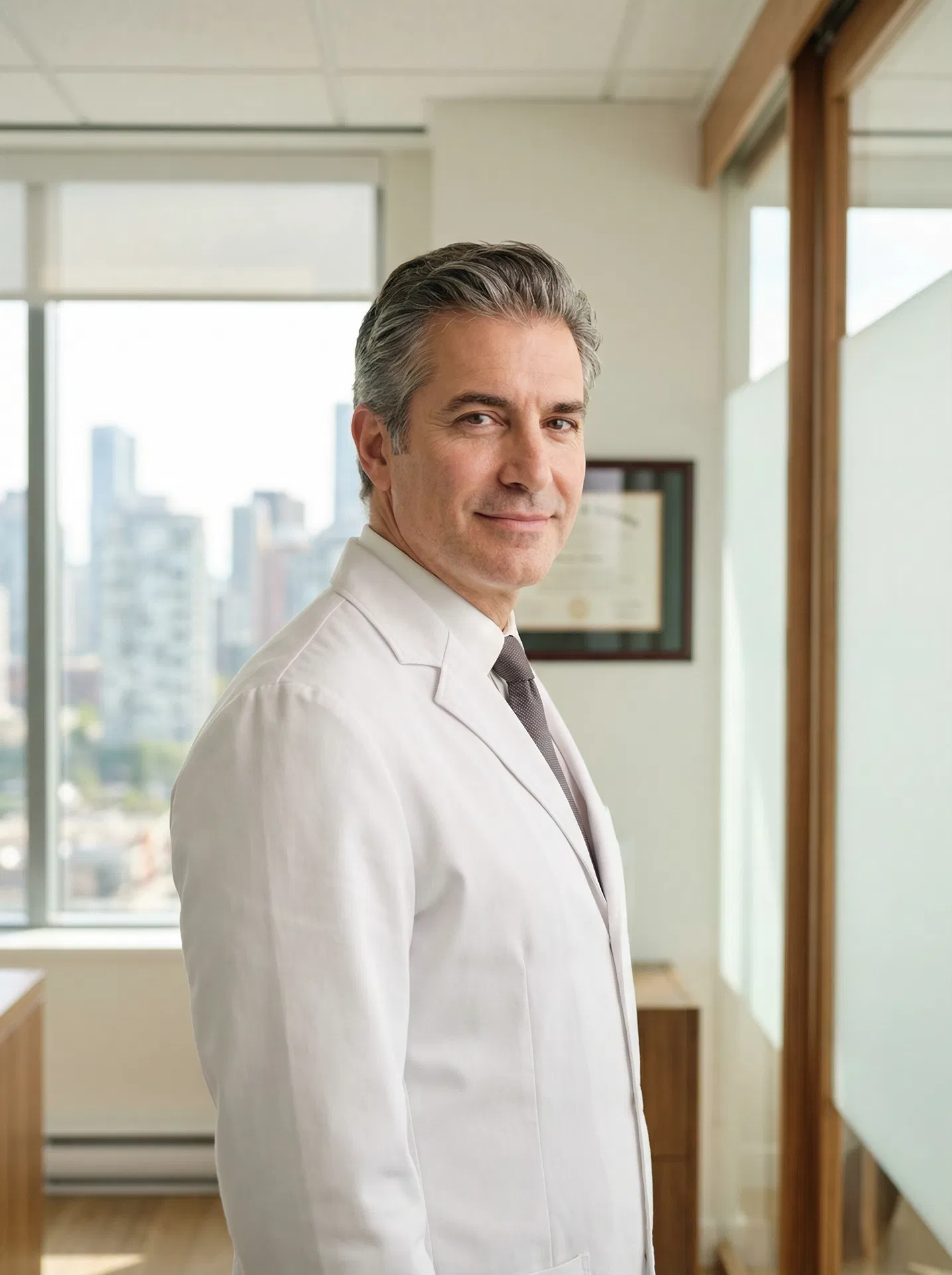
Dr. Thomas Buonassisi, FRCSC, ABFPRSAuthor · Reviewer
Facial Plastic Surgeon · Founder, 8 West Clinic · Vancouver, BC
Dr. Buonassisi is a dual board-certified facial plastic surgeon with over 25 years of experience in facial surgery exclusively. He has performed over 2,500 rhinoplasties and is the founder of 8 West Clinic in Vancouver. All content in the Knowledge Hub is written or reviewed directly by Dr. Buonassisi.
FRCSCABFPRSAAFPRSABOHNS
Free Resource
The Vancouver Rhinoplasty Guide
40+ pages written by Dr. Buonassisi. Candidacy, techniques, recovery, costs, and how to choose a surgeon. Free — no commitment required.
<h2>What is Body Dysmorphic Disorder (BDD) and How Does It Relate to Rhinoplasty?</h2> <p>Body Dysmorphic Disorder (BDD) is a mental health condition characterized by an obsessive focus on perceived flaws in appearance, which may be minor or nonexistent. For individuals considering rhinoplasty, understanding BDD is crucial, as it can significantly impact their perception of surgical outcomes. Many patients may feel that their nose is disproportionately large or unattractive, despite objective assessments indicating otherwise.</p> <p>As a board-certified facial plastic surgeon, I have encountered numerous patients who struggle with BDD. They may express dissatisfaction with their appearance, even when presented with examples of others who share similar features and appear confident or attractive. This disconnect can lead to unrealistic expectations regarding the results of rhinoplasty, making it essential to evaluate a patient's mental health before proceeding with surgery.</p> <h2>How Can You Recognize the Signs of BDD?</h2> <p>Recognizing the signs of Body Dysmorphic Disorder is vital for anyone considering cosmetic surgery. Common symptoms include persistent obsessions about appearance that can dominate a person's thoughts for hours or even an entire day. These obsessions often lead to significant distress, affecting self-esteem and daily functioning, including performance at work or school.</p> <p>Another indicator of BDD is the presence of compulsive behaviors, such as repeatedly checking one’s appearance in mirrors or seeking reassurance from others about perceived flaws. If you identify with these symptoms, it is crucial to seek professional help before considering any cosmetic procedures, including rhinoplasty.</p> <h2>Why Should Patients with BDD Avoid Cosmetic Surgery?</h2> <p>Patients with Body Dysmorphic Disorder should refrain from undergoing cosmetic surgery, including rhinoplasty, as it is unlikely to resolve their underlying issues. Even if the surgical result is technically perfect, individuals with BDD often do not perceive their appearance realistically and may remain dissatisfied with their results.</p> <p>The focus should be on treating the psychological aspects of BDD first. Addressing self-esteem issues and the distorted perception of one’s appearance through psychiatric support can lead to healthier outcomes. Only after these concerns have been adequately managed should a patient consider cosmetic surgery.</p> <h2>What Resources Are Available for Those Struggling with BDD?</h2> <p>If you suspect that you may have Body Dysmorphic Disorder, there are resources available to help you assess your situation and seek appropriate treatment. One such resource is the BDD Foundation, which offers online assessments and tools for self-evaluation. Their website provides valuable information on how to recognize BDD and steps to take if you need help.</p> <p>Additionally, reaching out to a mental health professional experienced in body image issues can provide the support needed to address underlying concerns. Prioritizing mental health can lead to improved self-perception and a more satisfying experience if you later choose to pursue rhinoplasty.</p>
Full Transcript
My name is Doctor. Bonesisi and I'm a board certified facial plastic surgeon with a practice in Vancouver, Canada. I've been specializing in cosmetic rhinoplasty for almost twenty years and I'm here to answer your questions about this very interesting procedure. Happy patients are educated patients, and that's why every question is a good one. So as a surgeon, I'm trying to evaluate whether you're a good candidate for rhinoplasty or not. And it's not just whether or not you have a feature that I can change that I can change for the better, it's also whether or not you're really looking at your nose and your other facial features in a way that is realistic and accurate. I've had patients in the past feel that their nose is incredibly big, and I'll look at them and I'll show them other patients who have noses that are very similar to theirs. It's interesting how they sometimes find the other patients look good, but they still don't like their nose. I think there are situations where even if we get an almost perfect result, some patients just do not see themselves in a way that is really accurate and one of the terms used for that is body dysmorphic disorder. It's actually fairly common amongst patients who are seeking rhinoplasty and I think that it does them a disservice to do this type of surgery when we feel that they're unlikely to perceive their nose realistically even with surgery. And I think that the underlying issue, whether it's a self esteem issue or just in general a type of body dysmorphic disorder, I think that really needs to be treated first. Here are some of the signs and symptoms. You suffer from obsessions about your appearance that lasts for hours or maybe even an entire day. Sometimes these obsessions make it hard to focus on anything other than your imperfection. This can lead to low self esteem or problems at work or school. You also may have repetitive compulsive behaviors, like looking at your flaw many, many times in a mirror every day. So somebody with body dys dysmorphic disorder should not have cosmetic surgery. They need to be treated psychiatrically because you're just not going to be happy with your cosmetic result no matter how perfect it is. Online tools cannot properly diagnose BDD, but if you visit bddfoundation dot org, you'll find some online assessments that will help you get started in evaluating yourself. You'll also find some tools for reaching out if you need help. Thanks for listening, and check back regularly for new questions and my honest answers about rhinoplasty.
[{"href":"/rhinoplasty-knowledge-hub/dr-buonassisi-cast-removal-and-nasal-taping-with-ashley-at-1-week-post-rhinoplasty","title":"Dr. Buonassisi: Cast Removal and Nasal Taping with Ashley at 1 Week Post Rhinoplasty"},{"href":"/rhinoplasty-knowledge-hub/dr-buonassisi-explains-body-dysmorphic-disorder-and-rhinoplasty","title":"Dr. Buonassisi Explains Body Dysmorphic Disorder and Rhinoplasty"},{"href":"/rhinoplasty-knowledge-hub/dr-buonassisi-answers-how-is-rhinoplasty-computer-imaging-different-to-self-photoshopping","title":"Dr. Buonassisi Answers: How is Rhinoplasty Computer Imaging Different to Self Photoshopping"},{"href":"/rhinoplasty-knowledge-hub/dr-buonassisi-talks-about-4-iffy-rhinoplasty-requests","title":"Dr. Buonassisi Talks About 4 Iffy Rhinoplasty Requests"},{"href":"/rhinoplasty-knowledge-hub/drbuonassisiexplainhealthconcernsforrhinoplastyv1-1080p","title":"dr._buonassisi_explains_health_concerns_for_rhinoplasty_v1 (1080p)"},{"href":"/rhinoplasty-knowledge-hub/sample-title-3-x-explained","title":"Sample Title 3: X Explained"}]