Starting point
Thinning hair or shedding
Your team usually looks at non-surgical care first: at-home care, TED, PRP and treatments made from your own biology.
8 West Clinic · Vancouver and North Vancouver
Why hair thins, the options that can be part of your plan, from at-home care and needle-free TED to treatments made from your own biology and hairline surgery, and how they fit together.
 8west.ca
01
This guide is for anyone noticing thinning hair or shedding, or thinking about a high hairline or forehead.
Read it in order, or go straight to what matters to you. Everything here is general information. Your own plan comes from a consultation, because everyone's hair and scalp are different.
Start here
Why hair thins, and every option we offer on one page, with who does it and where.
Your options
At-home care, TED, PRP, treatments made from your own biology, the red light bed, and hairline lowering.
Next steps
How it works, cost, and how to reach a patient care manager.
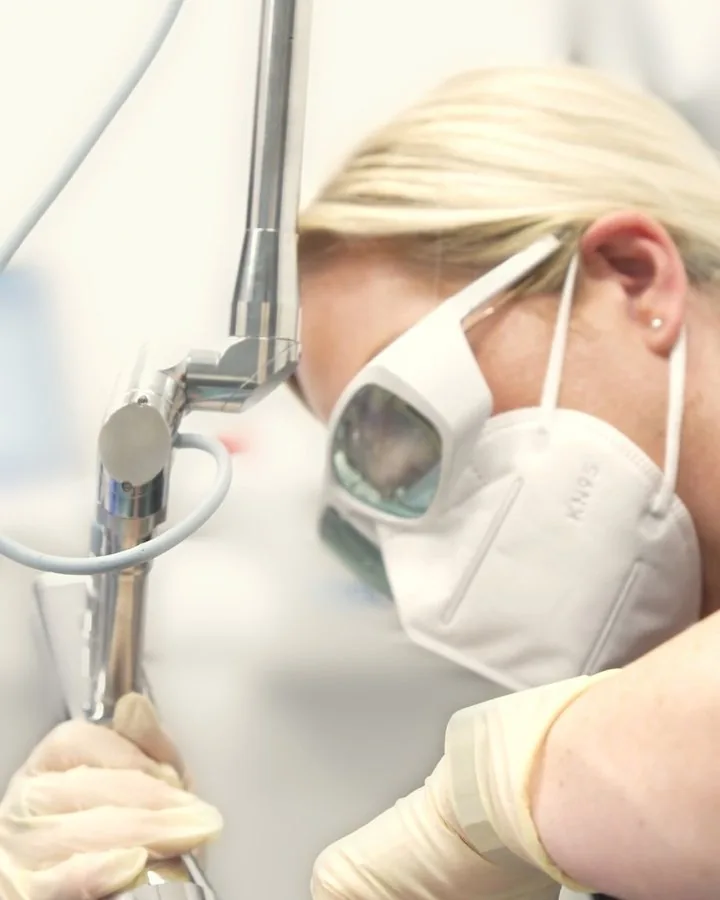
In-clinic treatments are done by our in-clinic team: expert medical aestheticians and registered nurses. Red light sessions are set up by our 8 West Well team. Hairline lowering is done by Dr. Thomas Buonassisi, MD, FRCSC. Every service runs under physician oversight, in a surgeon-led clinic.
02
Hair can thin for different reasons, such as genetics, hormones or stress, and the reason shapes the plan.
Each hair on your head goes through its own cycle: it grows for a time, rests, then sheds, and a new hair starts in the same follicle. Losing some hair every day is normal. Thinning shows when new hairs come in finer than before, or when more hairs than usual rest and shed at the same time.
Starting point
Your team usually looks at non-surgical care first: at-home care, TED, PRP and treatments made from your own biology.
Starting point
When the hairline is stable, hairline lowering moves it forward in one surgery. If your hair is still thinning, the non-surgical options come first.
Because 8 West Well is part of 8 West Clinic, your team can look at the whole picture, including hormones, when that's relevant.
This chapter is general information, not a diagnosis. Finding the likely reason for your thinning is the first thing your consultation does: your team looks at your scalp and your history before suggesting any options.
03
Your plan starts with an assessment, and it can draw on more than one of these, in the right order: at-home care, in-clinic treatments, treatments made from your own biology, and surgery.
| Option | What it is | Who does it | Where |
|---|---|---|---|
| At-home care | Scalp care between visits (chapter 4) | You, guided by your care team | At home |
| TED | Needle-free: ultrasound and air pressure carry hair growth factors into the scalp (chapter 5) | Expert medical aestheticians | At 8 West |
| PRP | Platelet-rich plasma, prepared from a small sample of your blood (chapter 6) | Our clinical team, under physician oversight | Ask your patient care manager |
| Nano fat | A small amount of your fat, filtered into a fine liquid (chapter 7) | Our clinical team | Ask your patient care manager |
| Personalised secretome | A serum made from your own hair follicles, applied to the scalp (chapter 7) | Expert medical aestheticians, with our partner lab | At 8 West |
| Exosomes | A serum containing growth factors and signalling proteins, added to in-clinic treatments | Expert medical aestheticians | At 8 West |
| Red light bed | Health optimization technology: a full-body bed with red, green, blue and near-infrared light (chapter 8) | Our 8 West Well team | At 8 West |
| Hairline lowering | Surgery that moves a high hairline forward (chapter 9) | Dr. Thomas Buonassisi, MD, FRCSC | At 8 West |
Whether any of these suits you, and how they fit together, is decided at your consultation.
Hairline lowering is done by Dr. Thomas Buonassisi, MD, FRCSC (chapter 9). Every service runs under physician oversight. The standard comes from a surgeon-led practice: natural results that respect your anatomy and still look like you.
04
What you do between visits is part of your plan, and your care team guides it.
Your care team advises what to do at home, so it works alongside your in-clinic treatments. At-home care is often a starting point, and easy to combine with in-clinic care.
Bring the products you use on your hair and scalp now to your consultation, so your team can see the whole picture. What suits you is decided there.
05
TED (TransEpidermal Delivery) uses ultrasound and air pressure to carry hair growth factors deep into the scalp, without needles.
It's a comfortable, non-invasive treatment, done by expert medical aestheticians at 8 West. It's planned as a series, then kept up with maintenance visits.
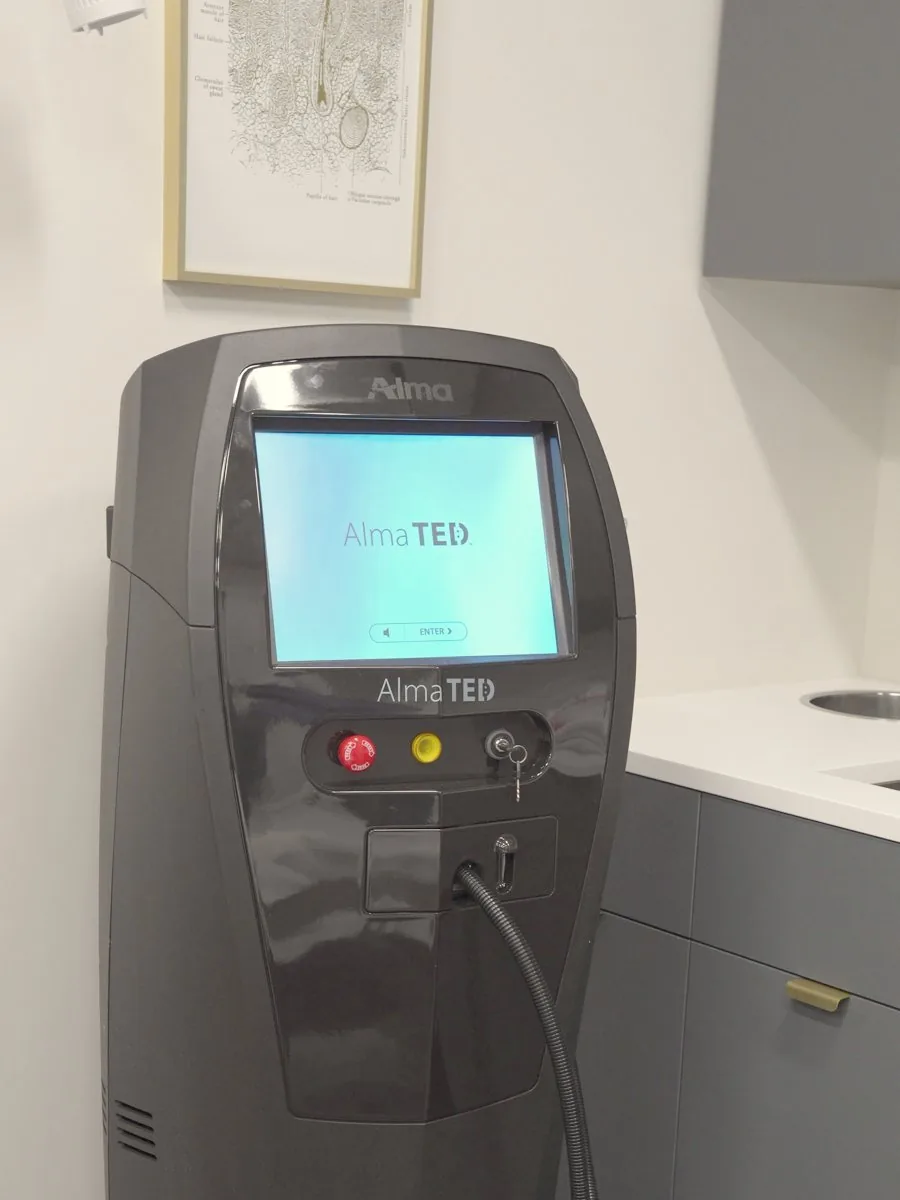
Men and women with early to moderate thinning or shedding who would rather not have injections or surgery, and who are ready for a series of treatments and maintenance visits. Whether TED suits you is decided at your consultation.
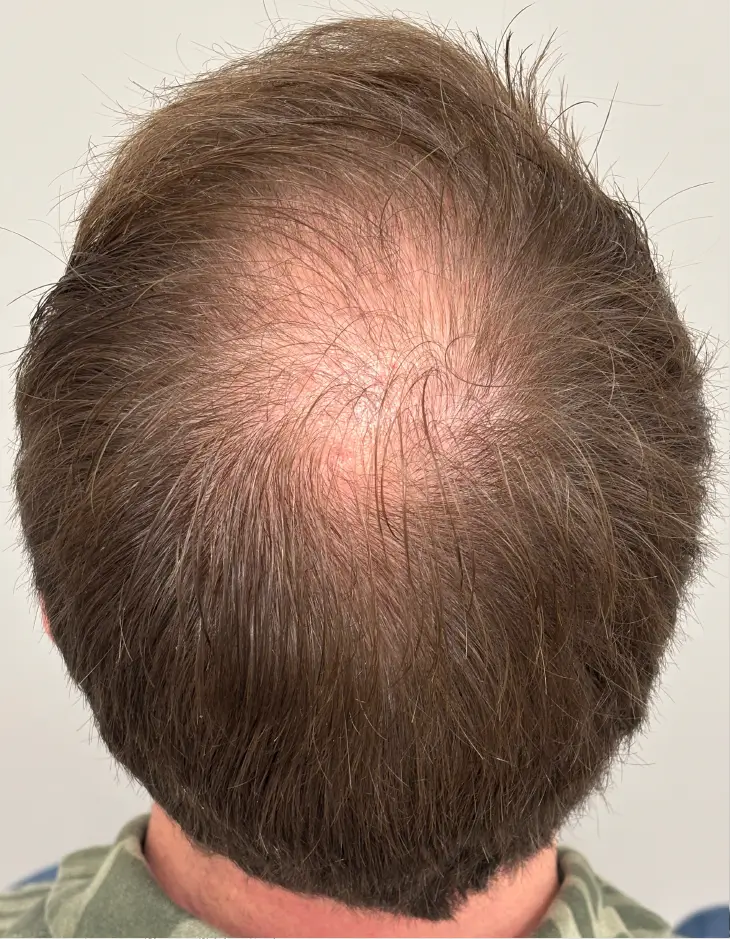
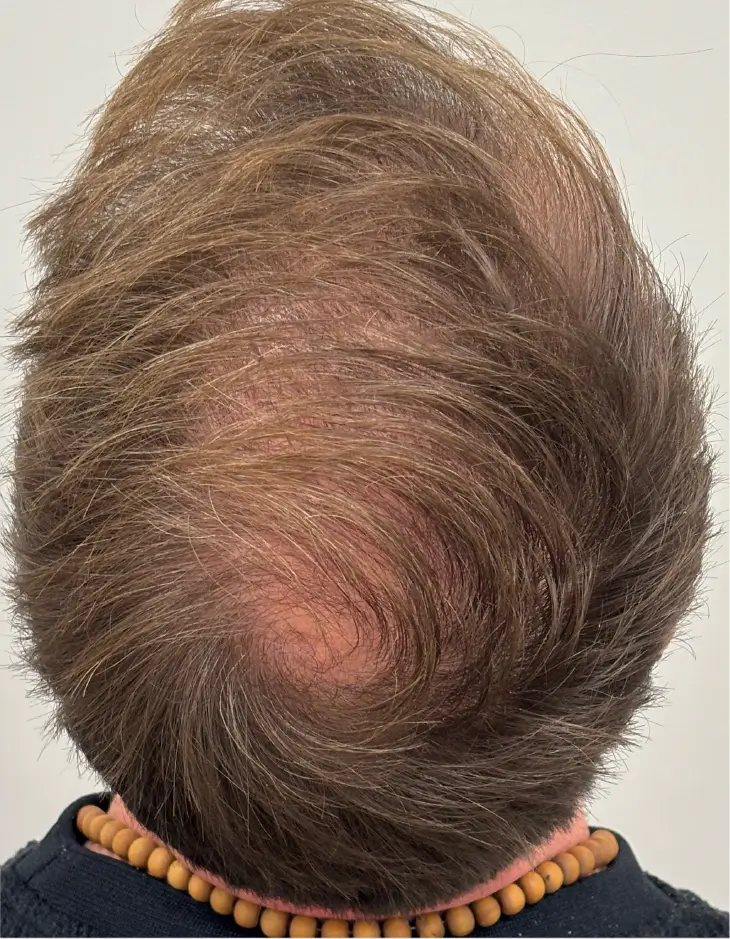
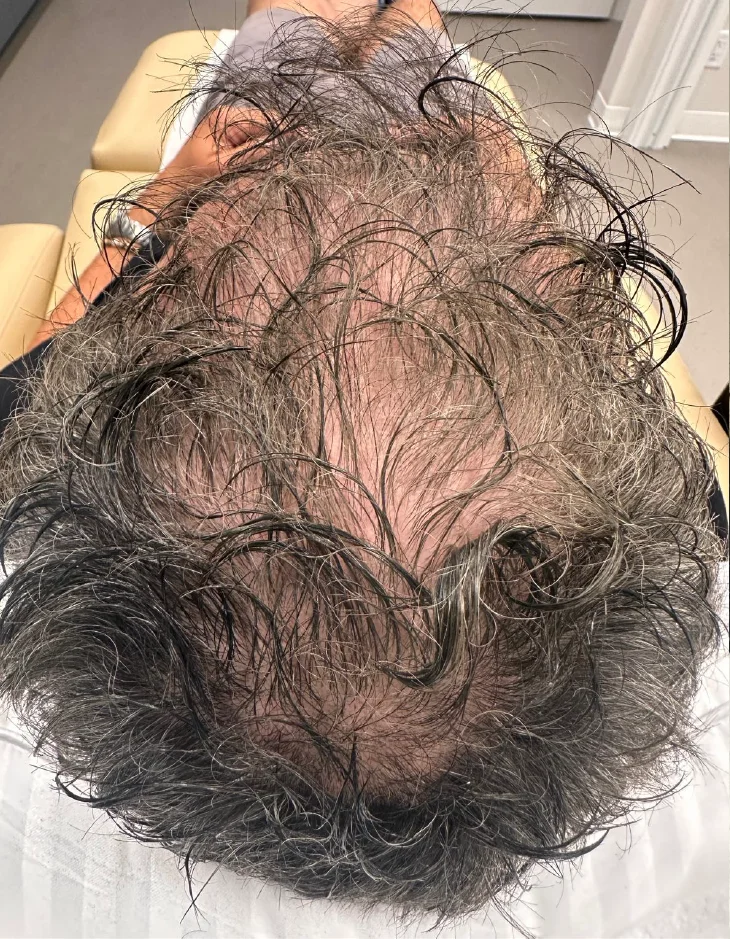
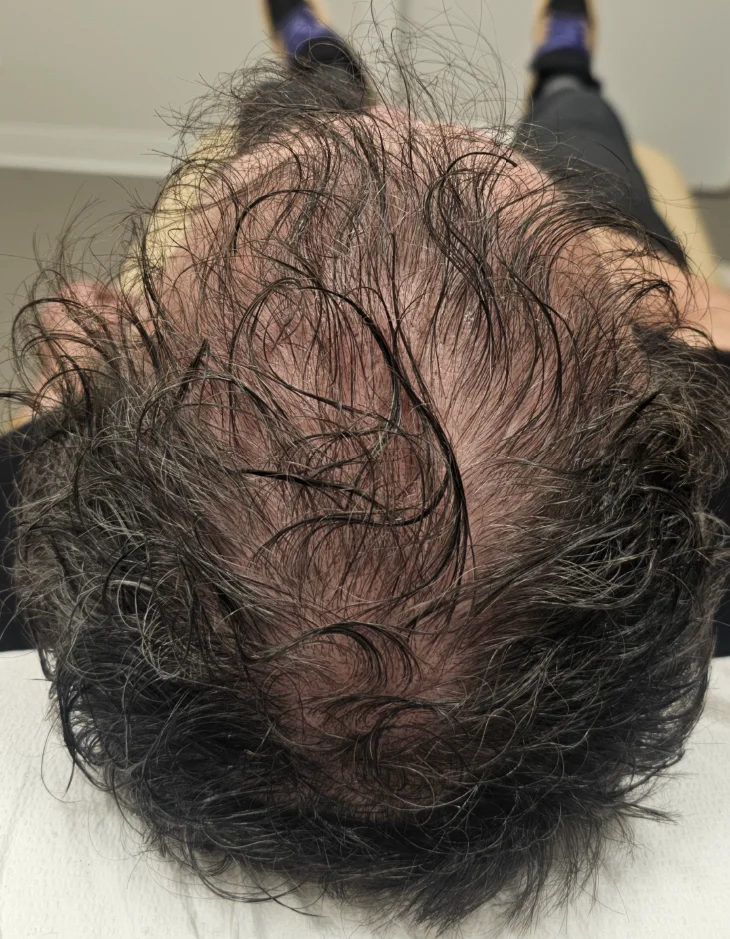
Real 8 West patients. Results vary.
A TED patient's story
“It was comfortable. The noise wasn't too loud. Fairly quick.”
06
PRP (platelet-rich plasma) is prepared from a small sample of your own blood.
The blood is spun to concentrate the platelets, and the PRP is given back to you. At 8 West, PRP is used on the scalp as part of hair restoration, and with medical microneedling on the face.
PRP comes from your blood. Nano fat, in the next chapter, comes from your fat. Each is prepared differently, and neither is the right choice for everyone.
Whether PRP suits you, and how it fits with your other treatments, is decided at your consultation. Your patient care manager can tell you more on your first call.
07
Nano fat and personalised secretome are regenerative aesthetic treatments prepared from you: a little of your own fat, or a serum made from your own hair follicles.
This chapter explains where each one comes from and how it's prepared. Whether one suits you, and how it fits your plan, is decided at your consultation.
Nano fat starts with a small amount of your own fat. Once it's collected, it's broken down and passed through a fine filter into a fine liquid, then injected into the scalp.
How nano fat starts
Collected, refined, then placed in the scalp. Nano fat can sit in the same plan as TED, PRP and your at-home care.
Made from about 50 of your own hair follicles, collected and banked. A lab uses the cells from them to make your personalised secretome, a serum of the proteins your cells release. It's applied to the skin or scalp, often after microneedling or laser.
The follicles are gently plucked from the back and sides of the scalp. The treatment is the serum, your personalised secretome, and in hair restoration it's applied to the scalp.
The cells collected from your hair follicles are banked (cryopreserved) by our partner lab. On request, the lab makes your personalised secretome from them. Your patient care manager can explain how banking works and what it costs.
| Treatment | Comes from | How it's prepared | How it's used |
|---|---|---|---|
| PRP | A small sample of your blood, taken at your visit | Spun to concentrate the platelets | On the scalp |
| Nano fat | A small amount of your own fat | Broken down and passed through a fine filter | Injected into the scalp |
| Personalised secretome | About 50 of your own hair follicles | A lab makes a serum of the proteins your cells release | Applied to the scalp, often after microneedling |
Each one comes from a different part of you. Which suits you, if any, is decided at your consultation.
08
Health optimization technology at 8 West: a full-body bed you lie in for a session.
It has red, green and blue light and near-infrared light, and each colour is absorbed at a different depth: blue and green near the surface, red a little deeper, near-infrared deepest. It's offered mainly on its own, and some people add it to other treatments and services they have at 8 West. Sessions are set up by our 8 West Well team.
Whether the red light bed fits your plan is decided at your consultation.
09
For a high forehead, hairline lowering (forehead reduction) moves the hairline forward in a single surgery.
Dr. Buonassisi makes an incision at the hairline, removes a strip of forehead skin, and moves the scalp forward. Where the incision sits, and where the new hairline falls, are planned around your anatomy. Results are immediate and permanent.
People with a stable, healthy hairline and realistic expectations about the scar. In his video, Dr. Buonassisi explains what he looks for: a hairline that isn't too tall, enough scalp mobility to move it forward, and thick hair, which helps hide the scar. He places the incision right at the edge of the hairline, to avoid losing hairs.
He also explains why men are not usually good candidates: a man's hairline tends to keep receding, so over time the scar would show. If your hair is still thinning, your team will talk you through the non-surgical options first.
Some patients choose hairline lowering as part of facial feminisation surgery. Every plan is approached with care and discretion. Whether hairline lowering suits you is decided at your consultation with Dr. Buonassisi.
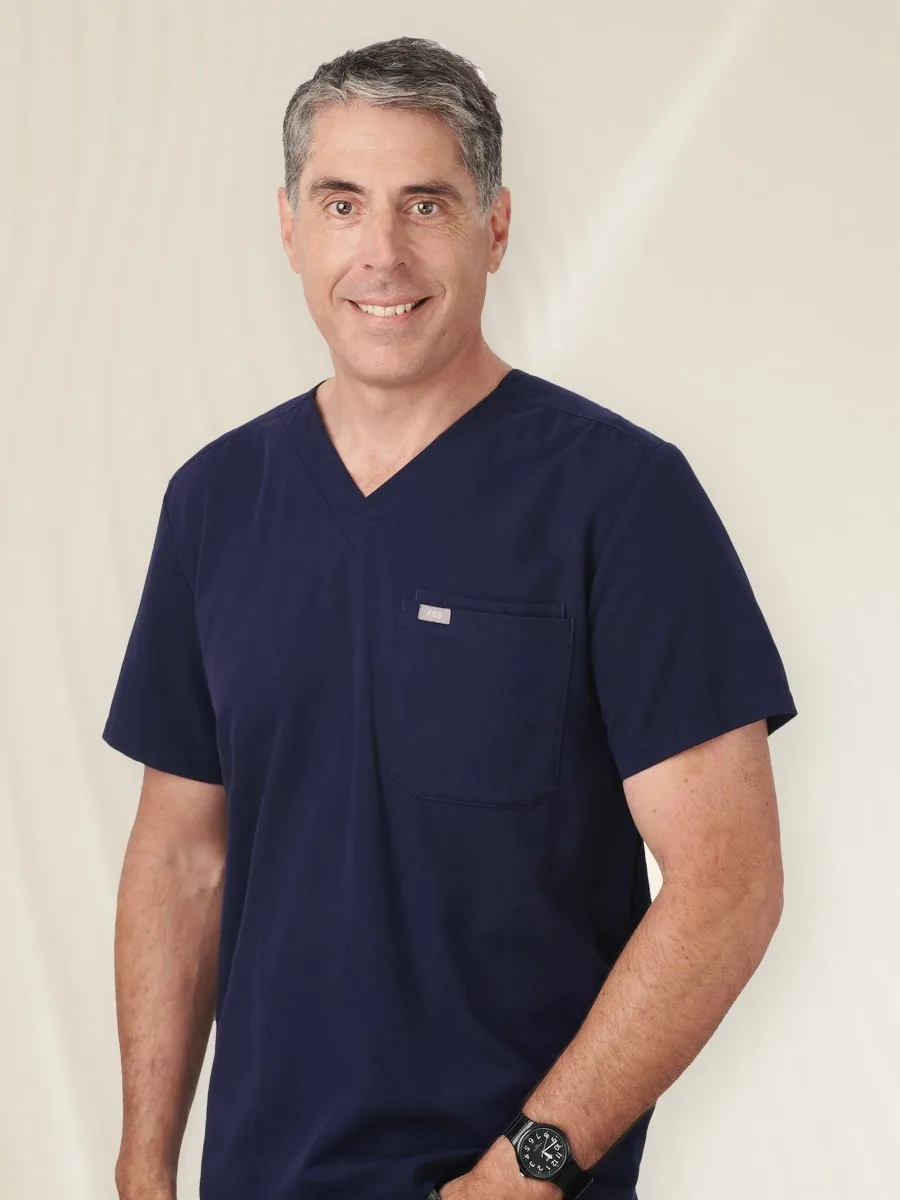
Your surgeon
A specialist in Otolaryngology – Head and Neck Surgery, with a practice limited to facial plastic surgeries, and co-founder of 8 West Clinic.
He has over 25 years of experience in facial plastic surgery. Along with his Canadian FRCSC in Otolaryngology – Head and Neck Surgery, he is Board Certified by the American Board of Facial Plastic and Reconstructive Surgery. He plans each hairline lowering around your anatomy, from where the incision sits to where the new hairline falls.
10
It starts with a conversation, and there's no obligation at any step.
01 · Contact
Fill in the short form at the end of this guide, or call 604-733-1669.
02 · First call
Complimentary, by phone, with no commitment. Your patient care manager answers your questions about treatments, timing and cost, and helps you choose the right consultation.
03 · Consultation
With the right person for your goals: a member of our in-clinic team for non-surgical care, or Dr. Buonassisi for hairline lowering. They look at your scalp and your history, explain what's realistic for you and build your plan. Consultations have a fee, which your patient care manager confirms when you book.
04 · Treatment
Hair grows slowly, so plans run over months, and some treatments, like TED, include maintenance visits. Your team checks in and adjusts as you go.
Bring these to your first call and your consultation.
11
All treatments at 8 West Clinic are private pay.
Your cost depends on your plan and is confirmed after your consultation. The first call with a patient care manager is complimentary: ask them about typical costs and the consultation fee before you book. Consultations have a fee.
12
A patient care manager will call you for a complimentary, friendly conversation, answer your questions, and help you book the right consultation when you're ready.
Prefer to talk now?
604-733-1669Call and a patient care manager can answer your questions. Or fill in the form below.
A patient care manager will call you. Strictly confidential.
Results vary. This content is for informational purposes only and does not constitute medical advice. Book a consultation at 8west.ca to discuss your individual candidacy.